

This website uses cookies to improve your experience. We'll assume you're ok with this, but you can opt-out if you wish. Read More
TL;DR: Bacteria-based self-healing concrete uses dormant Bacillus spores to autonomously repair structural cracks by precipitating calcium carbonate upon contact with water. While this technology delivers immense value for large-scale civil infrastructure by preventing reinforcement corrosion, its unpredictable visual finish and technical limitations make it currently unsuitable for bespoke commercial architecture requiring precise, highly controlled aesthetic surfaces.
Bacteria that repair cracks in concrete sounds absurd until you remember humans invented meetings and still call themselves advanced. The engineering world consistently pushes boundaries to extend the lifespan of our built environment. While researchers have long documented a brief history of self-healing cementitious materials, including early observations of autogenous crack healing and the broader material-science context, incorporating living organisms into building materials takes this capability to a completely different level. For architects and specifiers focused on creating premium environments, understanding where this brilliant science fits—and where it falls short—is critical.
What is bacteria-based self-healing concrete?
Bacteria-based self-healing concrete is an engineered material that actively repairs its own micro-cracks without human intervention. The technology relies on embedding dormant bacterial spores and a nutrient source directly into the concrete mix. These organisms remain inactive during the mixing, pouring, and curing stages.
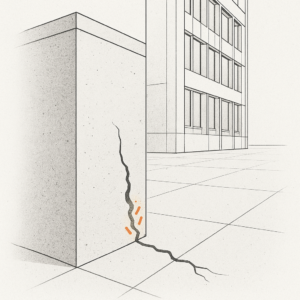
When a crack inevitably forms and water penetrates the concrete structure, the dormant spores awaken. They consume the provided nutrients and excrete limestone, sealing the void from the inside out. This biological mechanism transforms a static building material into an active, self-preserving system.
How do bacterial spores survive and repair concrete cracks?
The core mechanism relies on highly resilient Bacillus strains capable of surviving the highly alkaline environment of cement. Understanding how bacteria-based concrete works, including environmental conditions, bacterial survivability, and calcite formation as the healing compound reveals the precision required to execute this process.
Once water and oxygen enter a fissure, the aerobic bacteria germinate and multiply. As they metabolise the embedded calcium lactate, they produce insoluble calcium carbonate. This mineral gradually builds up along the crack faces, eventually bridging the gap entirely. Once the fissure is sealed and water is blocked, the bacteria return to their dormant state, ready to awaken if further structural stress occurs.
Where is self-healing concrete most effective in infrastructure?
The true value of self-healing concrete lies in long-life structural assets and aggressive environments. Civil engineers specify this material for bridges, tunnels, and subterranean foundations. Global institutions advocate for this biological approach, explaining how self-healing concrete can reduce crack-related reinforcement corrosion, repair needs, and durability risks.
By autonomously sealing micro-cracks before moisture reaches the internal steel rebar, the concrete prevents rust and subsequent spalling. We have already witnessed successful applications, such as the UK’s first site trial of self-healing concrete on the A465 Heads of the Valleys highway project. In these heavy-duty scenarios, the functional lifespan of the concrete far outweighs any aesthetic considerations.
Is bacteria-based concrete relevant to bespoke commercial architecture?
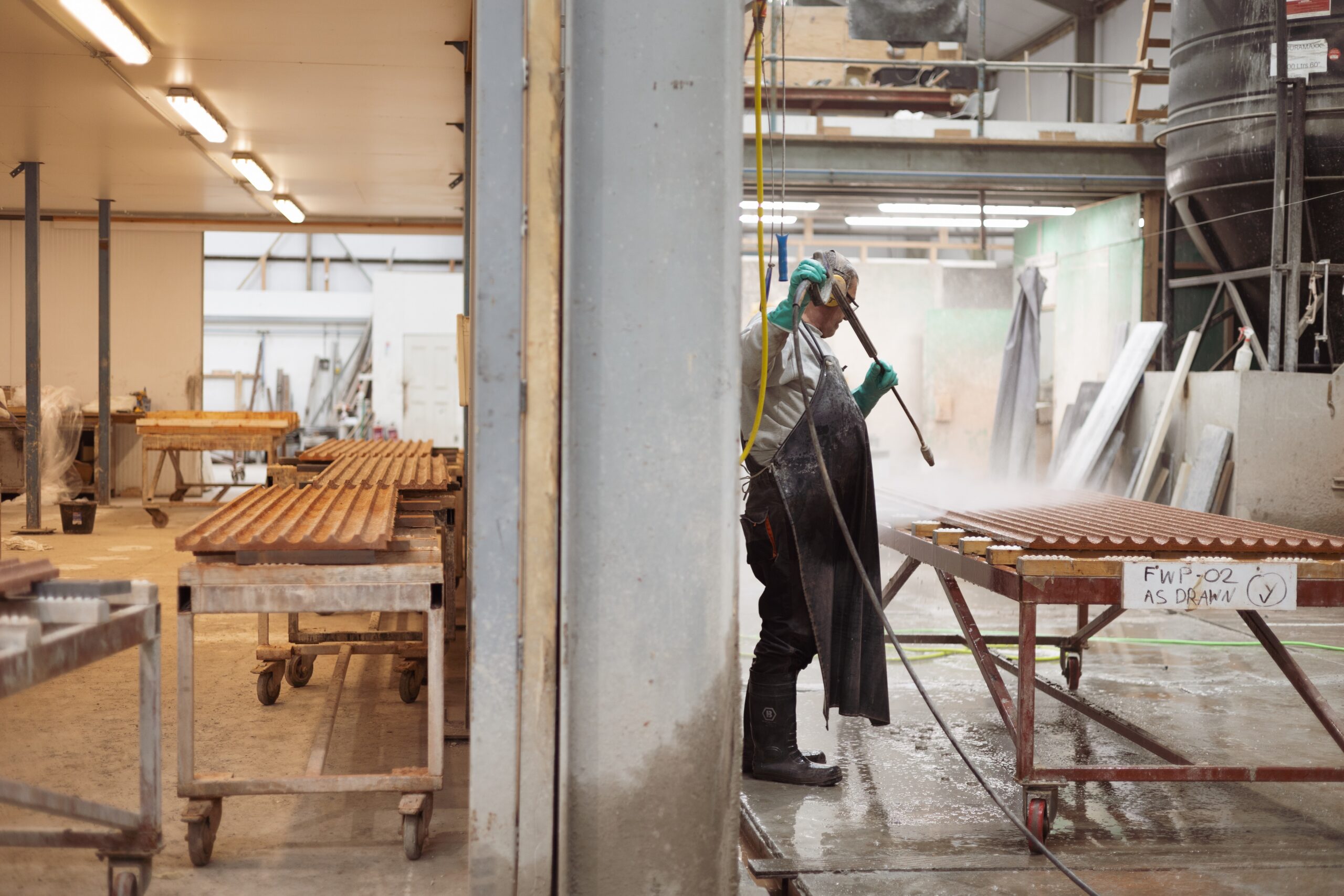
For specifiers designing double-height reception spaces, luxury lift lobbies, or feature dining halls, bacteria-based concrete currently offers little practical value. Commercial architecture demands absolute visual control. When bacteria heal a crack, the resulting calcium carbonate leaves a distinct white scar across the surface.
In bespoke concrete applications—from precision-crafted wall panels to polished retail flooring—visual consistency and texture dictate the success of your project. Architects choose bespoke concrete to deliver sharp geometric patterns, specific aggregate exposures, and custom pigmentations. A self-healing concrete mix cannot guarantee these refined architectural finishes, making it a structural powerhouse rather than an aesthetic choice.
What are the latest innovations in self-healing cementitious composites?
The scientific community continues to refine this technology for broader commercial viability. Academic institutions lead the charge, driven by Bath’s smart concrete research, including bacteria-based self-healing cementitious composites that precipitate calcium carbonate within cracks.
Engineers are actively testing different microencapsulation techniques to protect the bacteria during the harsh concrete mixing process. Furthermore, vascular networks—essentially artificial veins embedded within the concrete to deliver healing agents continuously—are moving from laboratory prototypes to field testing.
What are the main barriers to adopting self-healing concrete?
Despite the rapid scientific advancements, significant hurdles prevent widespread adoption across general construction. Current literature heavily documents the technical, environmental, field-testing, crack-width, and adoption barriers for low-carbon self-healing concrete.
The biological healing process typically only repairs micro-cracks up to 150 micrometres wide. Furthermore, the specialized bacterial spores and encapsulated nutrients significantly increase the upfront material costs. Until these financial and technical constraints are resolved, the technology will remain reserved for highly specialized civil engineering projects rather than everyday commercial developments.
Frequently Asked Questions about Self-Healing Concrete
Does self-healing concrete look the same as architectural concrete?
No. While the initial pour may look similar, the biological healing process leaves visible white calcium carbonate streaks along any repaired cracks. This makes it unsuitable for environments where visual uniformity is required.
How wide of a crack can bacteria-based concrete repair?
Current bacteria-based technologies reliably heal micro-cracks up to 150 micrometres in width. Larger structural fractures require traditional mechanical intervention and repair.
Is self-healing concrete more expensive than standard mixes?
Yes. The addition of dormant bacterial spores, specialized nutrients, and complex microencapsulation processes significantly increases the initial cost of the material compared to standard concrete mixes.
Guiding your next material specification
Self-healing concrete represents a monumental leap forward for civil infrastructure, safeguarding our bridges and tunnels against the slow creep of water and time. However, for interior designers and architects focused on commercial spaces, visual integrity remains paramount.
When your project demands a flawless, premium finish, rely on highly controlled, bespoke concrete surfaces crafted by specialists. We encourage you to explore the fascinating structural applications of bacteria-based concrete for your large-scale exterior foundations, but keep your feature walls, reception desks, and polished floors firmly in the hands of dedicated architectural concrete experts.
Information Gaps
During the research process, the specific cost multipliers (e.g., exact percentage increases over standard concrete per cubic metre) for current commercial bacteria-based concrete mixes were sought but not explicitly found in the retrieved literature. Broad cost barriers were noted, but exact pricing requires direct manufacturer quotes, which fluctuate based on regional availability and project scale.