

This website uses cookies to improve your experience. We'll assume you're ok with this, but you can opt-out if you wish. Read More
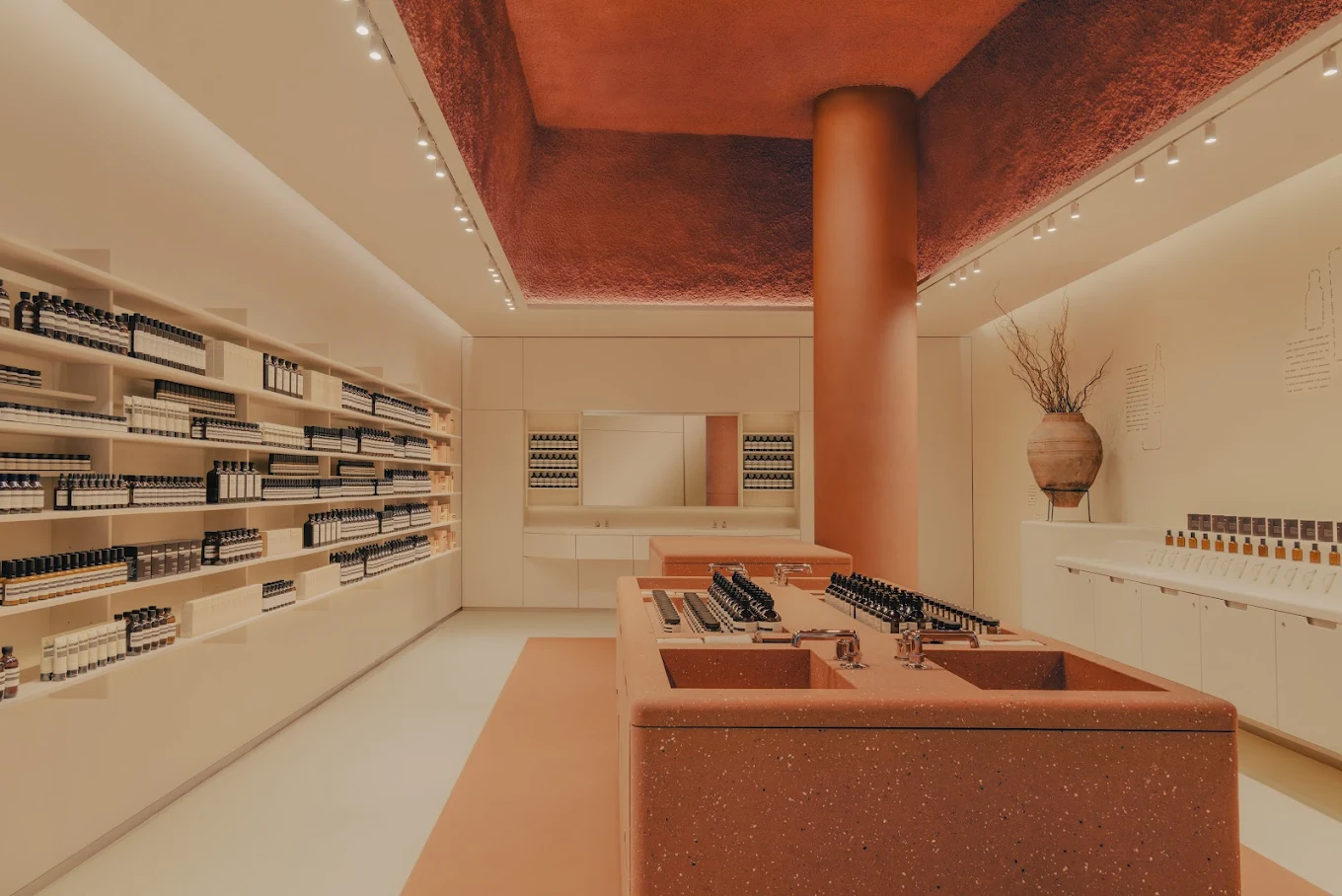
Concrete finish consistency comes from four disciplines working together: approved physical samples, tight batch controls, agreed tolerances, and honest client sign-off. Concrete is a natural material, so some variation is expected — but the right questions, asked early, keep that variation within an agreed range that protects your design intent.
Specifying a bespoke concrete finish is one of the most rewarding decisions a designer can make. It is also one of the most misunderstood. A board-marked feature wall, a run of polished floor panels, a reception desk cast to match a client’s brand palette — these surfaces carry the weight of the whole scheme. When every panel matches the approved sample, the result is quietly flawless. When one batch reads warmer or rougher than the next, the conversation on site rarely goes well.
The good news is that finish consistency is not luck. It is a process, and you can steer it. This guide sets out exactly what commercial designers should ask before committing to a concrete finish — covering what drives variation between batches, how sample approval protects you, what counts as acceptable variation, and where production controls and client sign-off fit into the picture. Use it to set realistic expectations, reduce specification errors, and keep your design intent intact from concept to handover.
Common questions about concrete finish consistency
Will every batch look identical to my approved sample? No finish will be a perfect clone across every batch — concrete is a natural material, and slight variation in colour and texture is part of its character. What a good supplier guarantees is that the finished work falls within an agreed range, benchmarked against a sample you have approved and signed off.
What does the right concrete mix look like? Properly mixed concrete should look like thick oatmeal and hold its shape when squeezed in a gloved hand, according to a clear mixing guidance. That “squeeze test” is a useful shorthand for the consistency that produces a reliable, repeatable finish.
Why do two batches sometimes look different? The biggest culprit is water. Adding just one extra quart of water to an 80-pound bag of mix can reduce the strength of the concrete by up to 40%, and changes to the water content also shift colour and surface texture. Curing, tooling, and timing all play their part too.
How do I make sure the finished product matches what I specified? Insist on a sample-led approval process, agree clear tolerances in writing, and confirm the supplier’s batch controls before production begins. Then sign off the result against your approved sample.
What affects consistency between batches?
Concrete finish is the sum of many small decisions, and consistency depends on controlling each one. The Portland Cement Association is clear that concrete quality rests on careful proportioning, a low water-cement ratio without sacrificing workability, the right admixtures, timely placement and finishing, proper consolidation, and disciplined curing. Change any of these between batches and the finish can shift.
Here are the main variables a supplier must hold steady:
- Water-cement ratio — the single most influential factor. More water means a weaker, often lighter and less consistent surface. Holding the ratio constant batch to batch is fundamental to colour and texture control.
- Admixtures — plasticisers and other additives improve workability without adding water. Used consistently, they help keep each pour behaving the same way.
- Raw material sourcing — aggregates, sand, and pigment from the same source keep the visual identity of the finish stable. A change of sand pit can change the cast.
- Timing and tooling — when a surface is worked, and with what tools, governs its final texture. Board-marked, fluted, or polished finishes all depend on disciplined, repeatable technique.
- Curing conditions — temperature and humidity during curing affect the depth and uniformity of colour.
This is where measurement earns its place. The ASTM C143/C143M slump test is the standard field and laboratory method for monitoring the consistency of unhardened concrete — a practical check that each batch is behaving as it should before it is ever placed. For a designer, the takeaway is simple: ask your supplier how they control these variables, and how they verify it.
Why does sample approval matter so much?
Sample approval is the foundation of finish consistency. Before a single production panel is cast, you should hold a physical sample that represents the colour, texture, and finish you have agreed — and your supplier should be casting the works to match it.
The precast industry has formalised this for good reason. PCI’s guide specifications for architectural precast concrete establish that colour and texture samples should be approved before manufacture, that approved samples should be initialled, and that mock-ups or initial production units can be used to establish the acceptability range for the finished work. In other words, the sample is not a mood-board prop — it is the contractual benchmark against which everything is judged.
For commercial designers, an approved sample does three things. It sets a clear, shared reference for everyone on the project. It manages colour and texture variation by defining what “”right”” looks like. And it gives you the leverage to reject work that drifts outside the agreed range. Skip this step, and “”consistency”” becomes a matter of opinion — usually argued out on site, after the panels are fixed.
A note on where the sample is made: for polished and aggregate-exposed finishes especially, mock-ups should be produced on the actual substrate wherever possible, not on a convenient off-site panel that bears little resemblance to the real slab. Cutting back surface paste reveals different sands and aggregates, so a sample cast under different conditions can mislead.
What counts as acceptable variation?
Every designer wants a uniform finish. The honest position is that concrete will always carry some natural variation — the skill lies in agreeing what is acceptable and capturing it in writing.
The precast sector quantifies this through tolerances. As the National Precast Concrete Association explains, tolerance is the allowable variation a component can be produced within, against its specified dimensions. There are three main classes:
- Product tolerances — the dimensional accuracy of each cast component.
- Erection tolerances — how accurately components can be set in their final position.
- Interfacing tolerances — how components meet other systems such as steel, glazing, or doors.
The numbers are tangible. An architectural wall panel up to 10 feet may carry a tolerance of plus or minus one-eighth of an inch, while particularly demanding components can be held to plus or minus one-sixteenth of an inch — a far tighter band that is harder and costlier to achieve. Crucially, the NPCA notes that a structure failing to meet its specified tolerances can be rejected, which is why the customer, the engineer, and the manufacturer must agree the same figures before work begins.
The lesson for finish consistency is the same as for dimensions: define the acceptable range, distinguish natural variation from genuine defects, and write it down. A faint difference in tone between two panels viewed at distance is natural variation. A blowhole-ridden surface or a panel two shades out is a defect. Agreeing that boundary upfront is the heart of effective concrete QA.
How do production controls keep finishes consistent?
Sample approval sets the target; production controls hit it repeatedly. This is where a supplier’s discipline either protects your design intent or quietly erodes it.
Strong production controls cover several fronts. Consistent batching keeps the water-cement ratio, admixture dosing, and raw materials the same from pour to pour. Consistent formwork and form facing ensure each panel takes its texture from an identical surface — the form face is, in effect, a mould for the finish. Controlled curing holds temperature and humidity steady so colour develops uniformly. And ongoing quality checks catch drift early, before a whole run is compromised.
The American Concrete Institute frames formed concrete surface requirements around exactly this kind of rigour — defining expectations through specifications, mock-ups, reference areas, surface texture, colour uniformity, form facing, and tolerances. For a designer, these are the levers to ask about. How is each batch verified? What slump and consistency checks are run? How is the form facing maintained across a production run? A supplier who can answer these clearly is a supplier you can trust with a bespoke finish.
This is also where realistic timelines matter. Rushing curing or batching to hit a compressed programme is one of the surest ways to introduce variation. Building proper production time into the schedule is part of protecting consistency, not a delay to be engineered out.
Why is client sign-off a critical checkpoint?
Client sign-off is the moment expectation meets reality — and getting it right prevents disputes later. Once an approved sample exists and the first production units are cast, the client should formally confirm that the finish meets their expectations against that benchmark.
This step does real work. The PCI guidance on initialling approved samples and using mock-ups to establish acceptability exists precisely so that “”acceptable”” is defined by an object everyone has touched and agreed, not by memory or marketing imagery. When a client signs off a sample knowing that some natural variation is part of the finish, the conversation at handover is straightforward. When they have not, even a beautiful floor can become a complaint.
For designers managing direct client relationships, sign-off is your protection. It aligns the client’s expectations with what concrete can genuinely deliver, it documents that agreement, and it closes the gap between the design intent and the finished work. Treat it as a decision-making checkpoint, not a formality.
Protecting your design intent from concept to handover
Concrete rewards designers who specify with their eyes open. Finish consistency is achievable — not through wishful thinking about a flawlessly uniform surface, but through approved samples, controlled batching, agreed tolerances, and honest client sign-off. Ask the right questions early, write the answers down, and you remove most of the risk before the first panel is cast.
The questions are straightforward. What sample am I approving, and is it cast on the right substrate? What tolerances are we agreeing, in writing? How does the supplier control batching, curing, and form facing across a run? And has the client signed off the finish, knowing what natural variation looks like? Get clear answers, and you keep your design intent intact from concept to specification.
At MASS Concrete, finish control is built into how we work — from a sample-led approval process to bespoke mixes, disciplined production, and a collaborative handover that keeps your design team, contractor, and client aligned. We bring bespoke concrete to life across commercial, retail, and hospitality projects, from feature wall panels and floor panels to reception desks, stair treads, and signage.
If you want certainty that the finished work will match the sample you approved, speak to our team about finish control on 01202 628 140.
Frequently asked questions
Can concrete finishes ever be perfectly uniform across every batch?
No, and any supplier promising perfect uniformity is overselling. Concrete is a natural material, and minor variation in colour and texture is inherent to it. What you can secure is a finish that stays within an agreed tolerance range, benchmarked against an approved sample. That is the realistic — and protectable — definition of consistency.
How early should I involve a concrete supplier in my project?
As early as possible, ideally at the design stage rather than at tender. Early input lets you agree samples, tolerances, mix design, and realistic production timelines before specifications are locked. It also reduces specification errors and gives your supplier time to flag weight, fixing, and installation considerations that affect the finish.
What is the difference between natural variation and a defect?
Natural variation is the subtle difference in tone or texture you would expect from a hand-crafted, cast material — visible on close inspection but within the agreed range. A defect falls outside that range: significant colour mismatch, surface blowholes, cracking, or texture that does not match the approved sample. Agreeing this boundary in writing before production is the key to avoiding disputes.
What tolerances should I specify for architectural concrete panels?
Tolerances depend on the component and application. Industry guidance puts a typical architectural wall panel up to 10 feet at plus or minus one-eighth of an inch, with tighter bands of plus or minus one-sixteenth of an inch possible where the design demands it — at greater cost and difficulty. Agree the figures with your supplier and engineer so everyone is working to the same numbers.
Who is responsible if the finished concrete doesn’t match the approved sample?
This is exactly why the sample-led approval and sign-off process exists. When you have an initialled, approved sample and agreed tolerances, the supplier is accountable for delivering work within that range. Without a documented benchmark, responsibility becomes a matter of opinion. Insist on the paperwork — it protects you, your client, and the project.