

This website uses cookies to improve your experience. We'll assume you're ok with this, but you can opt-out if you wish. Read More
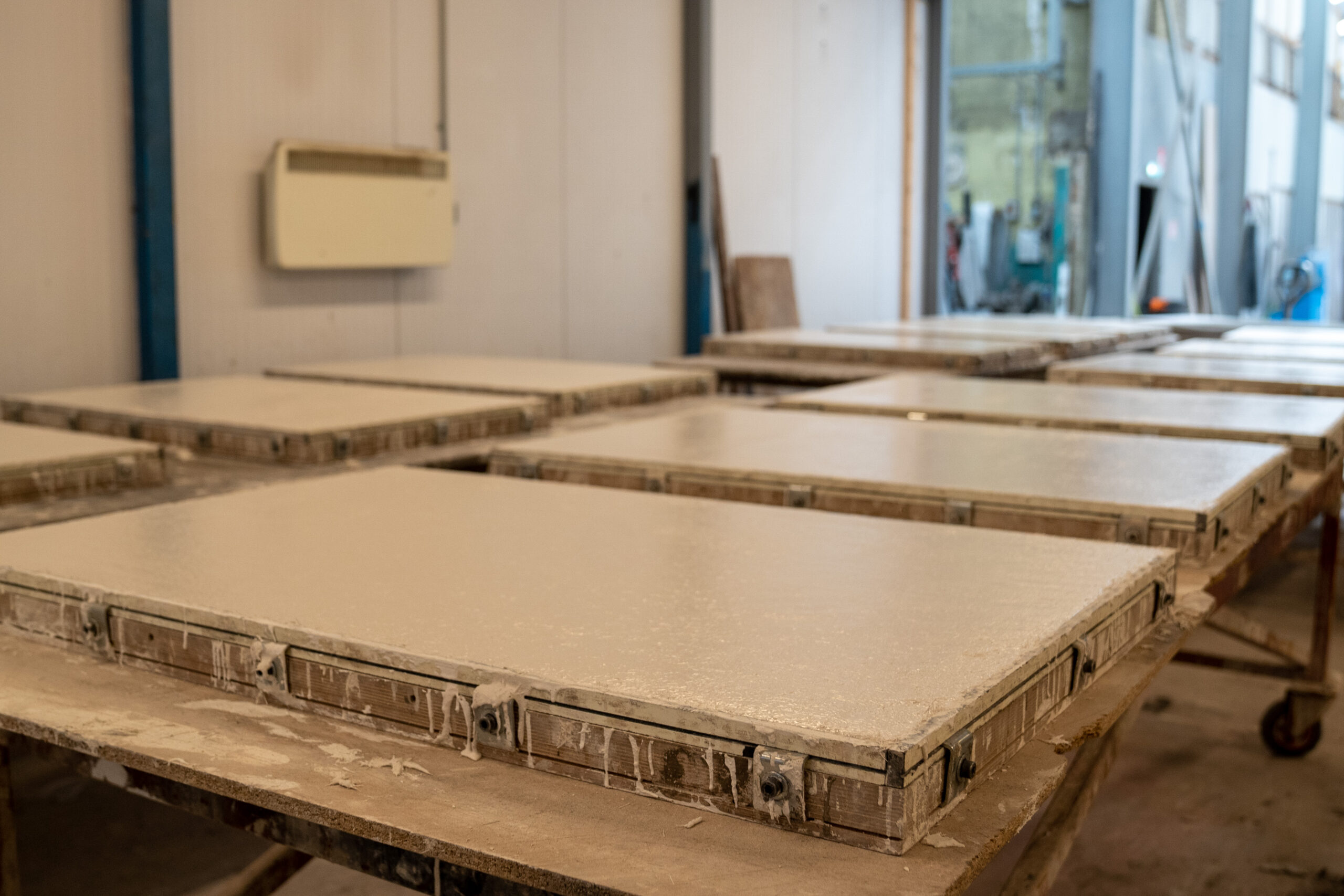
Quick answer: Graphene-enhanced concrete integrates graphene nanosheets into the cement matrix to increase structural strength and durability, potentially reducing cement demand by up to 30%. While laboratory results demonstrate exceptional performance, practical specification requires careful attention to cost, supply chain maturity, and rigorous testing against established standards.
The construction industry thrives on material innovation, and graphene-enhanced concrete currently dominates that conversation. Backed by institutions like UKRI and the University of Manchester, this advanced composite promises radical improvements in strength and environmental performance. For your design team, understanding the distinction between theoretical potential and practical specification remains crucial to protecting your creative vision.
How exactly does graphene-enhanced concrete work?
Graphene-enhanced concrete incorporates two-dimensional carbon lattices directly into the cement matrix. The University of Manchester Graphene Engineering Innovation Centre plays a pioneering role in developing commercial admixtures like Concretene, framing the benefits around immense strength, corrosion resistance, and significantly reduced material requirements.
Can graphene nanosheets genuinely improve concrete strength and durability?
Laboratory results confirm exceptional performance. A peer-reviewed analysis in ScienceDirect demonstrates that graphene-based nanosheets significantly reinforce the cementitious matrix—restricting micro-crack propagation and decreasing permeability. This refinement delivers substantial strength and durability gains, though the same review notes that achieving uniform dispersion at a commercial production scale presents ongoing implementation challenges.
Will graphene-enhanced concrete reduce global cement demand?
The environmental mandate for material innovation remains absolute. Cement production accounts for roughly 8% of global CO₂ emissions, according to a detailed report from Chatham House. By dramatically increasing the tensile and compressive capabilities of the mix, graphene-enhanced concrete can reduce the volume of cement required to achieve structural targets. According to [UKRI, 2025], this technology could ultimately cut the embodied carbon of concrete by 20% to 30%.
What are the practical considerations for availability, cost, and standards?
Transitioning from laboratory precision to active commercial environments introduces complex variables. An engineering-focused study published in ICE Construction Materials assesses the practical application of graphene-enhanced concrete at scale, highlighting the necessity of careful cost analysis and supply chain readiness.
Currently, bespoke formulations carry a premium, offset primarily by the reduction in required slab thickness. Furthermore, any specified admixture must comply with established performance frameworks, such as the ASTM C494/C494M standards for chemical admixtures, ensuring verifiable consistency from concept to specification.
Does graphene-enhanced concrete suit bespoke architectural finishes?
Your project demands aesthetic precision alongside structural integrity. While structural engineers focus on load-bearing capacities, architects must consider finish compatibility. Currently, graphene additives can slightly darken the concrete matrix. For luxury retail spaces, double-height reception areas, and bespoke architectural features, your design team must evaluate physical samples to ensure the material aligns with the client’s visual brand. A rigorous, sample-led approval process protects the design intent from early-stage concepts through to final installation.
How should architects navigate the hype versus practical specification?
The narrative surrounding graphene-enhanced concrete often blends future potential with current reality. While the strength and carbon-reduction figures inspire confidence, successful project coordination requires addressing contractor queries regarding weight, fixings, and mixing tolerances. Specifiers must demand robust technical data, realistic production timelines, and physical benchmarks.
What are the next steps for specifying graphene in your project?
By delivering knowledge, leadership, creativity, and technical excellence, we aim to challenge many of the perceived limitations surrounding modern building materials. Before committing to a novel admixture, secure early-stage design input from specialized manufacturers. Speak to our team to request physical samples, review technical guides, and determine if graphene-enhanced concrete suits the specific demands of the space you are working on.
Frequently Asked Questions about Graphene-Enhanced Concrete
How much does graphene-enhanced concrete cost compared to standard mixes?
Graphene-enhanced concrete carries a higher initial unit cost due to the complex manufacturing required to produce graphene nanosheets. However, overall project costs often equalize because the increased material strength allows for thinner structural sections and a reduced total volume of cement.
What is the current availability of commercial graphene concrete admixtures?
Commercial availability remains limited to specialized suppliers and regional pilot projects. Companies are scaling domestic production, but specifiers should verify local supply chain readiness and realistic timelines before integrating the material into large-scale commercial developments.
Are there alternative ways to reduce the embodied carbon of concrete?
Yes. If graphene-enhanced concrete proves unsuitable for your project timeline, specifiers can utilize supplementary cementitious materials, optimize structural design, or specify alternative low-carbon binders to achieve sustainability targets without relying on advanced nanomaterials.