






GFRC – Lightweight concrete without limiting the design
MASS Concrete manufactures bespoke Glass Reinforced Concrete (GRC) for architects, interior designers, contractors and specifiers looking for the appearance and material character of concrete without the weight and section depth of traditional precast.
Also known as Glassfibre Reinforced Concrete, Glass Fibre Reinforced Concrete or GFRC, GRC combines a cementitious matrix with alkali-resistant glass fibres to create thin, high-strength architectural components.
It is particularly well suited to large panels, complex geometries, curved forms, feature walls, façades and bespoke elements where conventional precast concrete would be unnecessarily heavy or difficult to install.
Planning a GRC project? Talk to MASS about design feasibility, samples, finishes, panel sizes and manufacture.
What is Glass Reinforced Concrete?
Glass Reinforced Concrete is a specialist form of fibre-reinforced concrete in which alkali-resistant glass fibres provide tensile and flexural reinforcement throughout the material.
Unlike conventional reinforced concrete, GRC does not rely on heavy steel reinforcement through the body of the panel. This allows much thinner sections to be produced while retaining the strength required for non-loadbearing architectural applications.
For MASS Concrete, a typical nominal GRC section is around 12–18 mm, compared with approximately 20–200 mm across the much broader range of traditional precast concrete products we manufacture.
The result is a concrete element that can retain the visual solidity, texture and permanence associated with concrete while substantially reducing material thickness and overall component weight.
Why specify GRC?
GRC becomes particularly valuable when the architectural ambition starts fighting with the practical limitations of conventional concrete.
Its thin section makes larger elements easier to handle and places less dead load on the supporting structure. Glass fibre reinforcement also gives the material the flexural performance required to create forms that would be difficult, cumbersome or inefficient in conventional precast concrete.
For architects and designers, that opens up considerably more freedom.
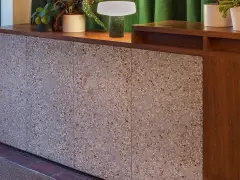
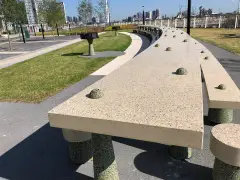
GRC can be used to create large-format panels, sweeping curves, sharp geometry, deep relief, detailed mouldings and complex three-dimensional forms while maintaining the genuine surface characteristics of concrete.
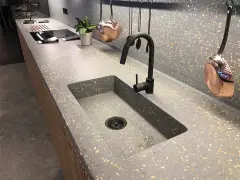
Because each MASS project is bespoke, colour, aggregate, texture and finishing can also form part of the design process rather than being restricted to a small catalogue of standard panels. Call us on 01202 628 140.
Related Projects
Be inspired by our most popular Concrete Surface projects
Click on the links below to see more:
Top Premium GFRC Samples by MASS Concrete
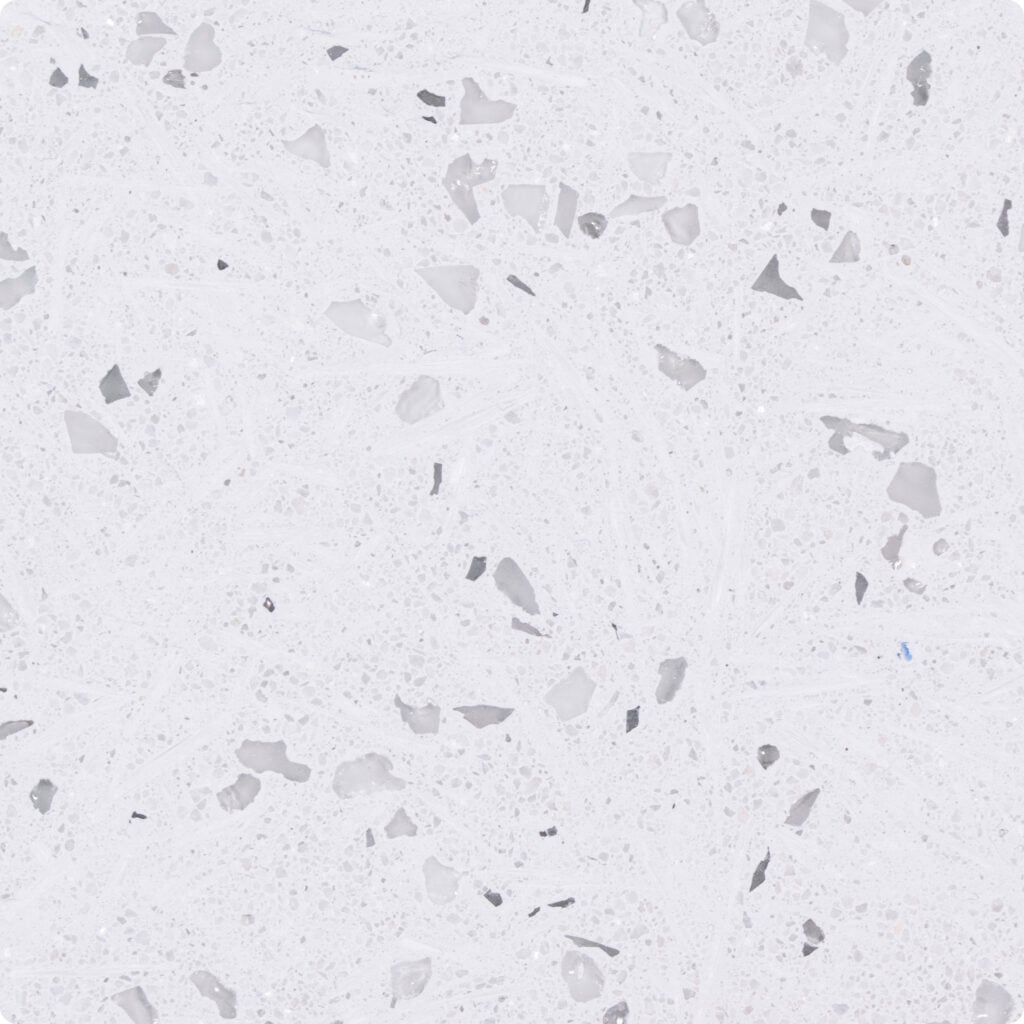
AW46_P_E_SP
We believe a mix should adapt to a designer’s vision, rather than limiting it. Formulated specifically for 12–18mm thin-section Glass Fibre Reinforced Concrete, this material achieves exceptional flexural strength at a mere fraction of the weight of traditional precast concrete. To create a visually cohesive, seamless interior scheme, this deeply textured aesthetic can be paired with our smoother, coordinating MASS finishes.
order a sample
AW08_S_SP
this Glass Fibre Reinforced Concrete (GRC) sample is an ideal choice for bespoke joinery, vertical wall cladding, and furniture components. The integration of glass fibres allows for high flexural strength at a reduced weight, making it possible to achieve large-format panels without the bulk of traditional casting. The use of natural dolomite sand not only adds a unique mineral shimmer but also contributes to the overall surface density.
order a sample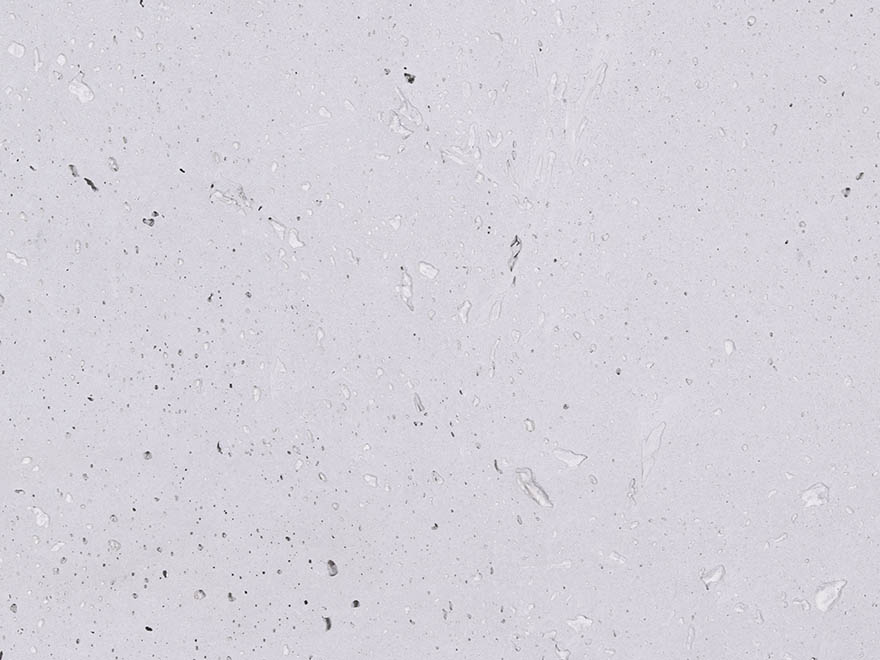
AW41_PUM_S_SP
This GRC sample demonstrates how high flexural strength can be achieved at a fraction of the weight of traditional casting. The inclusion of natural dolomite sand within the matrix adds a subtle mineral shimmer, providing a complex, light-catching contrast to the deeper, textured voids. For a seamless and aesthetically striking scheme, these MASS Pumice wall panels can be effortlessly complemented by our smoother, coordinating MASS floor panels.
order a sampleGRC or traditional precast concrete?
MASS manufactures both, because neither material is the correct answer to every brief.
| GRC | Traditional precast concrete | |
|---|---|---|
| Typical MASS thickness | Approx. 12–18 mm | Approx. 20–200 mm |
| Weight | Significantly reduced through thin-section construction | Higher |
| Reinforcement | Alkali-resistant glass fibres | Typically steel reinforcement where required |
| Complex shapes | Excellent | Possible, but weight and section depth become greater considerations |
| Large non-structural panels | Particularly well suited | Possible, subject to structural and handling requirements |
| Structural/loadbearing applications | Generally not its primary role | Better suited |
| Fine moulded detail | Excellent | Excellent |
| Bespoke colours and finishes | Yes | Yes |
| Heavy, monolithic appearance | Can replicate visually with reduced weight | Naturally suited |
The choice is therefore not simply “Which form of concrete is better?”
It is a question of what the finished component needs to do.
Where genuine mass, structural performance or substantial section depth is part of the requirement, traditional precast may remain the better solution. Where weight, complex geometry, panel size or installation constraints become important, GRC can offer considerable advantages.
MASS works with both materials, allowing the manufacturing approach to follow the design rather than forcing the design to fit a particular product.
request a quoteWhat can be made from GRC?
Architectural GRC is most effective where concrete needs to perform visually without behaving like a large block of conventional concrete.
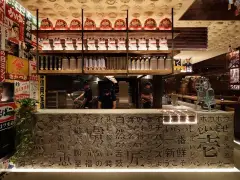
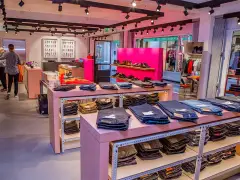
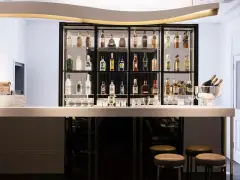
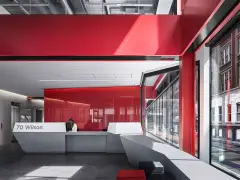
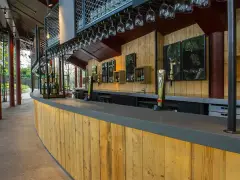
Applications can include internal feature walls, large-format wall panels, reception areas, retail and hospitality interiors, façade components, rainscreen elements, soffits, column casings, surrounds, mouldings, signage, furniture and bespoke sculptural components.
Complex moulds allow GRC to follow curves, corners, relief patterns and unusual geometries that would otherwise result in extremely heavy precast elements.
This makes it particularly useful for high-end commercial interiors and architectural projects where the concrete itself forms part of the visual identity of the space.
Freedom of colour, texture and finish
Specifying GRC does not mean accepting generic grey panels.
The final appearance can be developed through the concrete mix, pigments, aggregates, mould design and subsequent finishing processes.
Depending on the project requirements, GRC can be produced with smooth or textured surfaces, exposed aggregate, polished or honed finishes and bespoke colour formulations.
Decorative aggregates and other selected materials can also be incorporated into a project where technically appropriate.
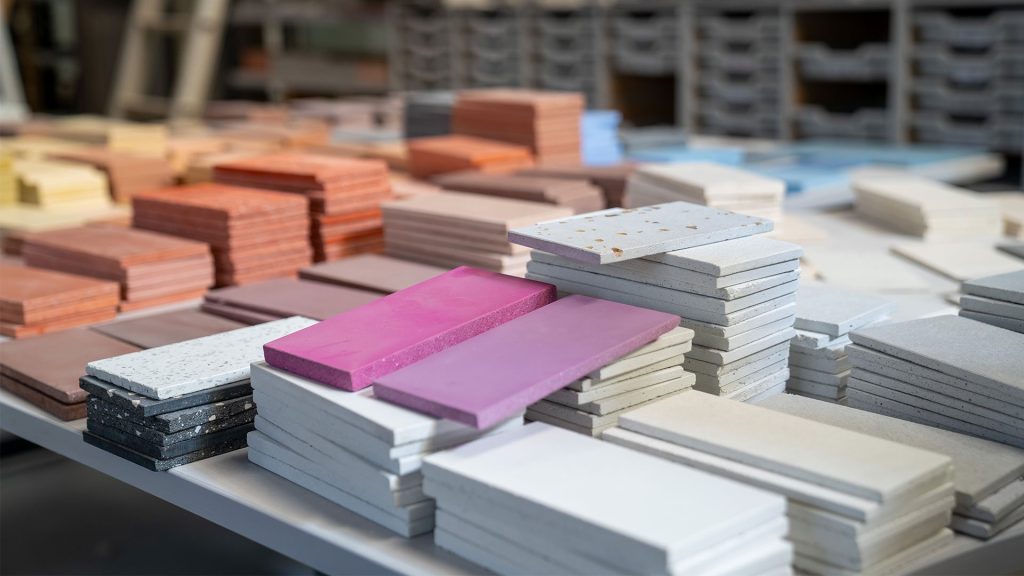
For specification-led projects, we recommend developing physical samples early in the design process. Concrete is a natural material and differences in aggregate, pigment, surface treatment and lighting can produce results that simply cannot be judged accurately from a screen.
GRC fire performance
GRC is a cement-based material capable of achieving very high reaction-to-fire performance, making it suitable for many demanding internal and external architectural applications.
However, fire classification depends upon the specific GRC formulation and tested product, including the presence and quantity of polymer modifiers or other constituents.
For façade applications in particular, the classification of an individual GRC panel should not be confused with compliance of the complete external wall construction. Insulation, membranes, substructure, cavity barriers, fixings and other components may all form part of the overall fire strategy.
MASS can provide the relevant product information for the proposed GRC specification and work with the project team to establish the appropriate requirements.
How is GRC manufactured?
There are several established methods of producing Glass Reinforced Concrete.
Direct spray GRC uses specialist equipment to simultaneously spray a cementitious slurry and chopped alkali-resistant glass fibres into a mould. The material is built up and compacted in layers, allowing relatively high fibre content and excellent mechanical performance.
Premix GRC incorporates shorter glass fibres directly into the concrete mixture before it is placed into the mould. This can be particularly useful for intricate three-dimensional components and other forms suited to casting.
There are also sprayed-premix and hybrid manufacturing methods.
The appropriate process depends on the size, geometry, finish and performance requirements of the finished component rather than simply the appearance of the design.
Understanding GRC grades
GRC can be classified according to its manufacturing method and mechanical performance.
The GRCA specification includes Grades 8, 10 and 18, together with polymer-modified variants identified by the suffix P.
Grade 8 is generally associated with general-purpose premix GRC, while Grade 10 covers sprayed premix or high-quality cast premix. Grade 18 represents direct-sprayed GRC with higher fibre content and greater flexural performance.
However, specifying the highest numerical grade by default is not necessarily good specification.
The material grade should suit the engineering requirements, geometry, dimensions, fixing strategy and intended application of the component.
For larger or technically demanding architectural GRC elements, those decisions should therefore be made alongside the manufacturer and project engineer rather than reduced to a number on a drawing.
GRC for complex architectural projects
The greatest advantage of GRC is not simply that it is lighter.
It is that weight stops dictating so much of the design.
Thin-section construction makes it possible to explore larger panels, more ambitious geometry and concrete surfaces in locations where the dead load, handling requirements or installation implications of conventional precast would otherwise become restrictive.
For boutique architectural, hospitality, retail and commercial projects, this allows concrete to behave much more like a designed surface or fabricated architectural material while retaining the depth, variation and authenticity that make real concrete distinctive.
When is GRC not the right material?
Part of specifying concrete properly is knowing when not to use it.
GRC is primarily an architectural, non-loadbearing material. It should not be treated as a substitute for structural reinforced concrete where the element itself must carry significant structural loads.
It can also be unnecessary for simple, thick components where weight is not a concern and conventional casting provides the required result more economically.
And sometimes the visual mass of traditional precast is actually part of the design.
Because MASS manufactures both GRC and conventional precast concrete, we can assess the brief without needing to force every project towards the same manufacturing method.
Speak to MASS early in the design process
The best time to discuss bespoke GRC is before the geometry, panelisation and fixing strategy have been completely locked down.
Early manufacturer input can help establish practical panel dimensions, suitable thicknesses, mould strategy, joint locations, finish options, fixing requirements and opportunities to simplify manufacture without compromising the architectural intent.
Send us your drawings, reference images, material palette or early concept.
We can help determine whether GRC, traditional precast concrete or a combination of the two provides the most appropriate route from concept to manufacture.
Discuss your GRC project with MASS Concrete.
request a quote