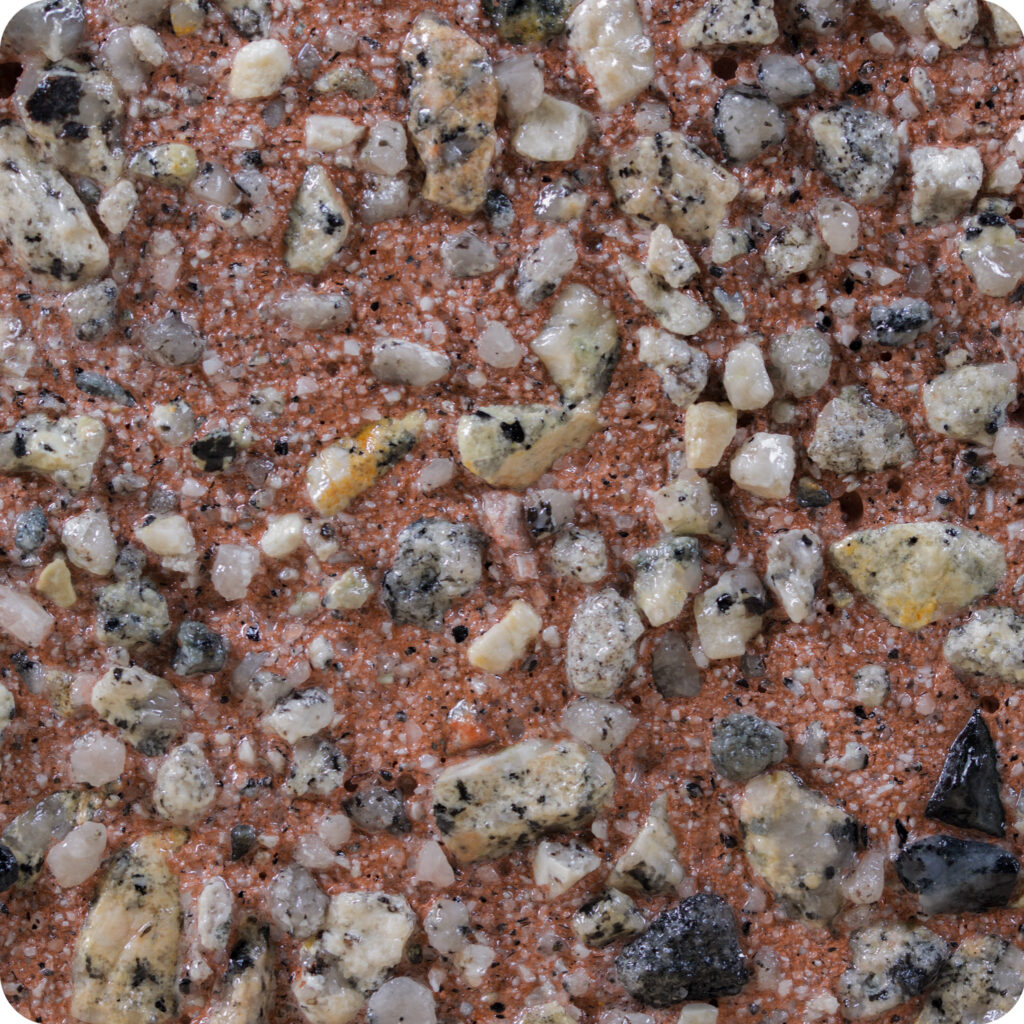
TER03 C2_R_RESIN_Terracotta Reclaimed Granite Concrete
TER03_C2_R takes the warm terracotta of our polished TER03_C2, coloured with mahogany, red and yellow pigments, and gives it a rugged, tactile face. Rather than grinding the surface flat, we apply a retarder to the mould face; once the panel is demoulded, the softened surface paste is washed away and the granite beneath is left standing proud of the red matrix in flecks of cream, black and grey, giving a rough texture with real depth. The LRV of this mix is around 30.00% in a polished finish, and will vary with the exposed aggregate.
Every one of those stones has travelled a long way. In the china clay pits around St Austell in Cornwall, around nine tonnes of waste rock are left behind for each tonne of usable clay, building up over generations into the spoil heaps known as the Cornish Alps. The clay forms from decomposed granite, so the leftover stone is granite as well: quartz, feldspar and mica that are hard, clean and full of character. Our St Austell supplier washes, crushes and grades it, and we use it in place of newly quarried stone. In a retarded finish, that reclaimed stone becomes the surface itself, so its origin is something you can see and touch.
This is a finish for wall panels, cladding and furniture, wherever the material should be felt as well as seen. Over larger areas the exposed aggregate creates a lot of movement, giving architectural projects a warm tone with a more robust, natural character.
Choosing reclaimed aggregate eases demand for virgin extraction, takes less energy to process than newly quarried stone, and keeps a valuable resource out of the spoil heap. Aggregate size, pigment balance and depth of exposure can all be adjusted to suit the brief.