

This website uses cookies to improve your experience. We'll assume you're ok with this, but you can opt-out if you wish. Read More
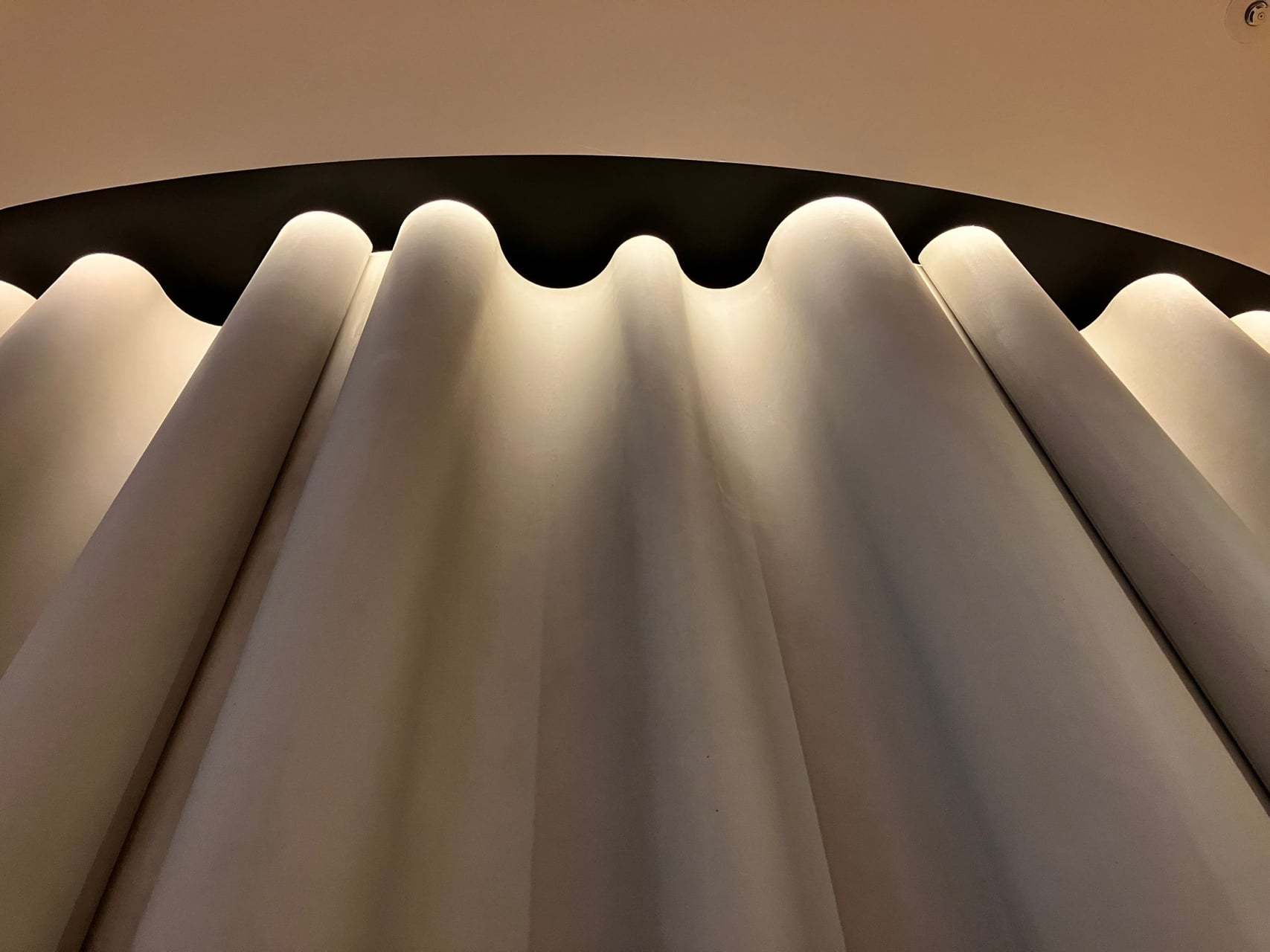
Functional architectural surfaces extend concrete far beyond its structural role. Light-transmitting concrete, self-healing mixes, carbon-cured formulations, graphene composites, photocatalytic coatings, and digitally optimised mix designs are each redefining what a concrete surface can do – with real implications for specification, performance, and sustainability.
Concrete has always done more than most people credit it for. Structural load-bearing, thermal mass, acoustic absorption, fire resistance – these are established properties, not emerging ones. What is changing, and changing quickly, is the ambition of the surfaces themselves. A new generation of functional concrete technologies is asking a different question: not simply what a surface can withstand, but what it can actively do.
For architects and specifiers working on commercial, retail, and hospitality projects, that question is increasingly relevant. Here is where the research currently stands – and what it means for your next specification.
Table of Contents
What is translucent concrete, and how does it transmit light?
Light-transmitting concrete – sometimes called translucent concrete – embeds optical fibres within a cementitious matrix to channel daylight through an otherwise opaque panel. The fibres align parallel to the panel face, transmitting light from one side to the other while the concrete between them retains its structural character.
A 2021 MDPI review of light-transmitting concrete outlines the mechanics clearly: optical fibre ratios typically range from 3% to 6% by volume, with measurable effects on both transmitted illuminance and compressive performance depending on fibre arrangement and matrix composition. The review also highlights genuine potential for energy saving – panels used as building envelopes can reduce artificial lighting demand – while noting that durability testing, long-term weathering data, and standardised testing protocols remain active research gaps rather than resolved specification items.
In architectural practice, the application range is still expanding: feature walls where backlit panels create shifting daylighting effects, signage integrations, and interior partitions where visual connection is desired without transparency. The aesthetic is distinctive. The specification demands careful early-stage coordination, particularly around panel thickness, fibre orientation, and the quality of light source behind.
How does self-healing concrete work, and what are the durability benefits?
Cracking is the defining maintenance challenge of concrete in use. Self-healing concrete attempts to address it from within, through either autogenous or autonomous healing mechanisms.
Autogenous healing relies on the concrete’s own chemistry – unhydrated cement particles reacting with water that enters a crack, partially closing it over time. Autonomous healing goes further, introducing an external agent – most commonly bacteria – that triggers calcite precipitation when cracks form and moisture is present.
A 2022 review published in Materials (PMC9106089) surveys both routes in detail, examining bacterial strains, encapsulation methods, and the evidence base for crack-sealing effectiveness. The review identifies real promise: autonomous healing can close cracks that exceed the autogenous threshold, with potential benefits for long-term durability and reduced maintenance intervention. It also identifies limitations – inconsistent performance across different crack widths, questions about bacterial viability over service life, and the cost premium associated with encapsulated-agent systems.
For specifiers, the practical implication is directional rather than prescriptive. Self-healing concrete is not yet a drop-in specification for standard commercial work, but it is a technology worth tracking for exposed external surfaces, infrastructure-adjacent architectural work, and projects where whole-life cost is a primary client driver.
Does carbon-cured concrete actually reduce emissions?
Carbon curing – injecting CO₂ into concrete during the curing process to mineralise it within the matrix – has attracted significant industry interest as a potential route to lower embodied carbon. The mechanism is real: CO₂ reacts with calcium silicate hydrate phases to form stable carbonates, permanently locking carbon into the material.
However, a 2021 paper published in Nature Communications – Ravikumar et al., “Carbon dioxide utilization in concrete curing or mixing might not produce a net climate benefit” – urges caution. The study’s central finding is that whether carbon-cured concrete delivers a net climate benefit depends critically on where the CO₂ comes from, how far it is transported, the curing protocol used, and how strength effects are accounted for in the overall mix design. When CO₂ is sourced from fossil fuel combustion or transported over long distances, the lifecycle emissions picture can be neutral or worse than conventional curing.
This is not an argument against the technology. It is an argument for specification rigour. Carbon-cured concrete can offer genuine sustainability benefits under the right conditions – and the right conditions need to be verified, not assumed.
What does graphene actually do to concrete performance?
Graphene as a concrete additive has generated considerable research interest, and the performance data is striking. Research on nanoengineered graphene-concrete composites from the University of Exeter reports increases of up to 146% in compressive strength and 79.5% in flexural strength compared to standard mixes. Alongside mechanical improvements, the research identifies enhanced electrical conductivity and barrier properties – opening possibilities for sensor-integrated surfaces and smart infrastructure applications.
The practical implication for mix efficiency is also significant: if strength is dramatically increased, cement content can potentially be reduced for equivalent structural performance, with direct benefits for embodied carbon. That said, graphene is not yet a standard specification item. Dispersion consistency at scale, cost of production, and integration into standard batching processes remain engineering challenges. Graphene-enhanced concrete is best understood as a high-performance specialist route currently transitioning from laboratory demonstration to early commercial trials.
How do photocatalytic concrete surfaces improve air quality and self-cleaning performance?
Photocatalytic concrete surfaces use titanium dioxide (TiO₂) – applied by mixing, spraying, or impregnation – to initiate chemical reactions under UV light that break down nitrogen oxides, volatile organic compounds, and other atmospheric pollutants at the surface.
Research published in 2025 (PMC12735896) examines TiO₂-coated concrete in detail, demonstrating degradation of organic compounds, improved surface hydrophilicity, and the dual benefit of self-cleaning and air-quality contribution in urban infrastructure contexts. The hydrophilicity effect is particularly relevant for façade maintenance: a more hydrophilic surface sheds surface contamination with rainwater rather than accumulating it.
For architects specifying façades, external wall panels, or urban paving in high-traffic or high-pollution environments, photocatalytic surface treatment is among the more technically mature of the functional concrete innovations – with active research into preparation method optimisation, coating durability, and long-term field performance.
What role does digital optimisation play in bespoke concrete mix design?
Computational concrete mix design – using statistical models, machine learning, and physics-based algorithms to optimise mix proportions – represents a significant shift from traditional prescriptive and trial-batch approaches. A comprehensive 2018 review in Cement and Concrete Research (DeRousseau, Kasprzyk, and Srubar) surveys the full landscape of computational optimisation methods, from linear models to evolutionary algorithms, and identifies the core advantage clearly: computational optimisation can navigate multiple competing performance requirements – strength, workability, durability, cost, and environmental impact – simultaneously, where traditional methods optimise for one or two variables at a time.
For bespoke concrete work, this matters. A project requiring a specific colour, a particular surface texture, an unusual aggregate package, and compliance with structural load requirements generates a genuinely complex specification problem. Digitally-informed mix design – where performance targets are modelled before batching begins – reduces trial iterations, tightens quality control, and produces a more predictable outcome at sample stage. That predictability, in turn, protects the design intent through to installation.
From speculative to specifiable: where are these technologies now?
The honest answer is: at different points on the same journey. Photocatalytic surfaces and computationally optimised mixes are closest to standard specification. Self-healing concrete and light-transmitting panels are increasingly available through specialist manufacturers, though with narrower application envelopes. Graphene-enhanced mixes and carbon-cured concrete are both technically proven at research scale, with commercialisation progressing but not yet mainstream.
What connects them is the direction of travel. Concrete is no longer just a material that passively occupies space – it is becoming a surface that responds, performs, and contributes to the environmental quality of the buildings it forms. That shift has real implications for how specifications are written, how early manufacturer engagement happens, and how design teams articulate performance expectations to clients.
Next steps for designers and architects
The most productive approach at this stage is not to specify all of these technologies at once, but to understand where each one is technically credible and commercially accessible for the project in front of you.
For light-transmitting panels, photocatalytic facades, or bespoke mixes requiring digital optimisation, early-stage dialogue with a specialist concrete manufacturer is the single most valuable step. Bring the brief – the environment, the surface, the client’s performance requirements – and have that conversation before the specification is fixed. The sample process, the fixing strategy, the lead time, and the realistic performance envelope all need to be established before the design development stage closes.
Concrete has always been the most architecturally versatile material on a construction project. The next generation of functional surfaces makes it something more – a surface that works as hard as the brief demands. To explore what that means for your current project, speak to our team.
Frequently Asked Questions
What is translucent or light-transmitting concrete?
Light-transmitting concrete is a cementitious panel containing embedded optical fibres that channel daylight through an otherwise solid surface. Fibre ratios typically range from 3–6% by volume. It is used in feature walls, signage, and interior partitions where ambient light transmission is desired without structural compromise.
Is self-healing concrete suitable for commercial projects?
Self-healing concrete – through autogenous chemistry or bacteria-triggered calcite deposition – is technically proven but not yet a standard commercial specification. It is most relevant for exposed surfaces, external applications, or projects where long-term maintenance reduction is a primary client requirement. Whole-life cost analysis is the appropriate framework for evaluating it.
Does carbon-cured concrete always reduce embodied carbon?
Not automatically. According to research published in Nature Communications (2021), the net lifecycle benefit depends on the source and transport of the CO₂ used, the curing protocol, and how strength effects are factored into the mix design. Carbon-cured concrete can deliver genuine sustainability gains, but only when the full supply chain is verified against conventional curing.
How much stronger is graphene-enhanced concrete than standard mixes?
University of Exeter research on nanoengineered graphene-concrete composites reports compressive strength increases of up to 146% and flexural strength increases of up to 79.5% compared to standard Portland cement mixes. These gains also allow for potential cement content reductions, which has direct implications for embodied carbon.
What is photocatalytic concrete and where is it most effective?
Photocatalytic concrete uses TiO₂ embedded in or applied to the surface to break down air pollutants and maintain surface cleanliness through UV-activated chemical reactions. It is most effective on external façades, wall panels, and paving in urban or high-traffic environments where nitrogen oxide and VOC concentrations are elevated. Coating durability over long service life remains an active area of research.
How does digitally optimised mix design benefit a bespoke concrete specification?
Computational mix design uses mathematical models and machine learning to balance multiple competing performance variables – strength, workability, cost, environmental impact – simultaneously. For bespoke projects with specific colour, texture, and structural requirements, it reduces trial iterations, tightens quality control, and produces more consistent sample approval outcomes.