

This website uses cookies to improve your experience. We'll assume you're ok with this, but you can opt-out if you wish. Read More
To specify low-carbon concrete effectively, architects must ask suppliers for Environmental Product Declarations (EPDs) and target specific Global Warming Potential (GWP) thresholds. Achieving a genuine low-carbon finish requires replacing traditional cement with Supplementary Cementitious Materials (SCMs) like fly ash or specifying portland-limestone cement, without compromising commercial durability.
Concrete is synonymous with permanence, shaping environments from double-height reception spaces to bespoke retail storefronts. But as the architectural industry pivots toward sustainability, specifying “green” concrete has become a complex endeavour. This guide empowers your design team to navigate emerging ratings, interrogate suppliers, and deliver uncompromising architectural integrity.
How do low-carbon concrete ratings actually work?
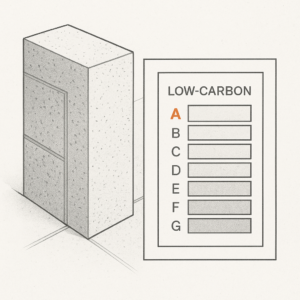
Understanding the true carbon footprint of your bespoke concrete requires a standardised benchmark. The GCCA Global Ratings for Concrete establish a clear framework—scaling from AA (near-zero emissions) to G-based on strength-adjusted Global Warming Potential (GWP) thresholds. By using these ratings, specifiers can confidently evaluate procurement options and protect the design intent while meeting stringent sustainability targets.
What questions should you ask your concrete supplier?
To guarantee precision and alignment with your client’s brand, you must interrogate the proposed materials. The World Economic Forum’s First Movers Coalition procurement guide provides procurement-oriented guidance on exactly how buyers and specifiers can ask suppliers for emissions targets, accounting data, and clearer low-carbon concrete requirements.
Essential questions to ask your supplier include:
- What is the specific cement replacement ratio?
- Are you providing a mix-specific EPD?
- How will the modified mix design impact curing timelines and final aesthetics?
Why do cement type and SCMs matter for carbon reduction?
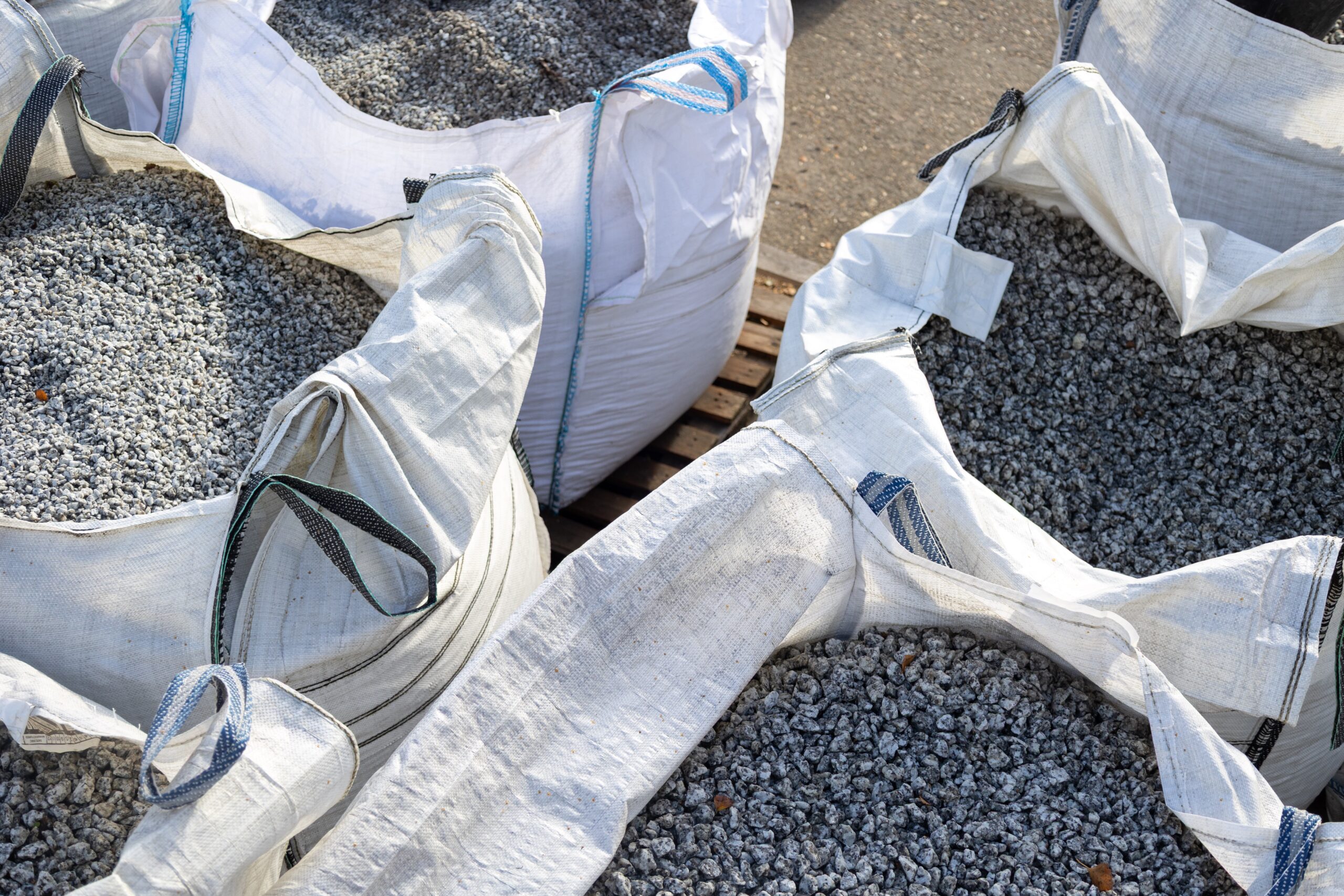
The majority of embodied carbon in concrete originates from traditional Portland cement. To reduce this footprint, architects can specify alternative cement types or incorporate Supplementary Cementitious Materials (SCMs).
For example, portland-limestone cement Type IL, supported by ASTM and AASHTO standards, serves as a proven, lower-carbon cement option. Alternatively, integrating fly ash at typical replacement ranges of 15% to 30% significantly reduces cement demand while altering mix-design considerations to improve workability and long-term strength. Choose SCM-heavy mixes if long-term durability matters more than rapid setting times.
How does mix design influence embodied carbon?
A bespoke mix design does more than dictate texture – it directly controls the carbon output. Incorporating recycled content, such as crushed glass or reclaimed aggregate, lowers the demand for virgin materials. However, altering the mix design requires careful coordination with your supplier to ensure the sample-led approval process accurately reflects the final, commercial-grade finish.
How can you evaluate carbon data using EPDs?
An Environmental Product Declaration (EPD) is the only verifiable way to measure the environmental impact of your bespoke concrete. The US Environmental Protection Agency (EPA) defines embodied carbon for construction materials and points to vital resources for evaluating EPDs. Relying on concrete data rather than greenwashed marketing ensures your project complies with rigorous carbon standards.
How do you balance low-carbon concrete with commercial durability?
Low-carbon solutions must still perform flawlessly in high-traffic environments—from busy lift lobbies to external public pathways. While SCMs like fly ash can delay early strength development, they often enhance ultimate strength and decrease permeability. Real-world public-sector low-carbon concrete case studies from the City of Portland demonstrate how targeted GWP thresholds, EPD requirements, and pilot mixes successfully balance carbon reduction with rigorous performance testing outcomes.
What is the GCCA’s low-carbon rating system?
For those shaping the future of architecture, the GCCA’s rating system offers a vital tool. Introduced to standardise global carbon reporting, this mechanism categorises concrete mixes by measuring embodied carbon dioxide equivalent per cubic metre (ECO₂e/m³). It allows your design team to seamlessly compare carbon performance across different suppliers, ensuring your pursuit of a bespoke finish never compromises your environmental baseline.
What are the next steps for specifying bespoke concrete?
Achieving architectural excellence with low-carbon concrete requires early-stage design input and rigorous sample consistency. Partner with specialists who understand both the chemistry of carbon reduction and the art of concrete craftsmanship. By engaging your supplier during the concept phase, you protect the design intent and ensure your project is delivered on time.
Frequently Asked Questions (FAQ)
What is the timeline impact of using low-carbon concrete?
Low-carbon mixes utilising high volumes of SCMs may require extended curing times before reaching early strength, though they often achieve higher ultimate strength than traditional concrete.
Does low-carbon concrete cost more than standard mixes?
While initial material costs can be comparable, bespoke testing, custom EPD generation, and extended curing schedules may introduce slight cost variations during the construction phase.
How does replacing cement affect the visual finish?
Different SCMs alter the matrix colour – slag may lighten the finish, while fly ash can introduce warmer or darker undertones, making early sample approval essential.
What are the structural risks of using high-recycled-content mixes?
If not properly engineered, excessive recycled aggregate can reduce compressive strength and increase water demand, requiring precise mix design modifications by a qualified supplier.