

This website uses cookies to improve your experience. We'll assume you're ok with this, but you can opt-out if you wish. Read More
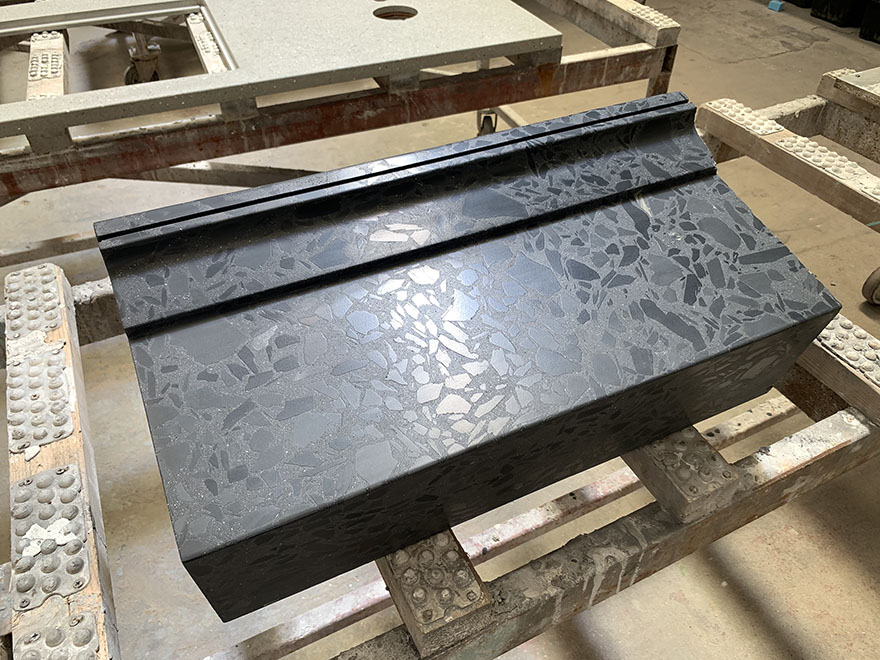
Polished concrete is frequently misdescribed in the market as any concrete floor that happens to look glossy. That is not a defensible technical definition. In current Concrete Polishing Council terminology, polished concrete is a concrete floor surface processed to a specified level of finished gloss using a bonded-abrasive, burnished or hybrid polishing route. By contrast, a film-forming, surface-coated floor is not classed by the CPC as polished concrete at all, even if the visual result appears shiny. That distinction matters because the mechanism of performance is different: true polished concrete derives its finish primarily from mechanical refinement of the substrate, whereas coated systems derive gloss from a sacrificial film.
From a specification standpoint, polished concrete must be treated as a floor system, not as an afterthought applied to an ordinary slab. ASCC guidance is blunt on this point: concrete suitable for many conventional floor finishes is often unsuitable for polishing and a slab designated for polishing should be specified differently from standard cast-in-place concrete. The same guidance recommends separate concrete and finishing sections, a preinstallation conference involving the concrete contractor, ready-mix producer, polishing contractor and design team and a jobsite mock-up using the same materials and methods intended for the works.
The Origins of Modern Polished Concrete
While the earliest forms of polished concrete date back to the ancient city of Jericho around 1200 BC, the highly refined, mirror-like surfaces we see in contemporary commercial and residential spaces are a relatively recent innovation. Surprisingly, the birth of the modern dry-polishing process was the result of a serendipitous mistake. In 1998, during a palace renovation project in Tunisia, a construction crew inadvertently failed to add water to their concrete grinding equipment. Rather than ruining the floor, this dry-grinding method yielded an exceptionally beautiful, high-gloss finish, effectively launching the modern concrete polishing industry.
This accidental discovery was supported by crucial technological advancements happening throughout the decade. In the early 1990s, the Swedish company HTC, led by founder Håkan Thysell, pioneered the development of modern planetary concrete grinders. Introducing their first dry-polishing equipment in 1992, HTC was instrumental in refining the heavy machinery used today. Concurrently, Advanced Floor Products—based in Salt Lake City, Utah—revolutionized the chemical side of the process. They introduced the Retro Plate system, which was the first comprehensive method to combine mechanical grinding with a chemical penetrating densifier and hardener, ensuring the floor’s longevity matched its aesthetic appeal.
This modern technique quickly gained traction worldwide, making its grand debut in the United States just before the turn of the millennium. In 1999, the first major large-scale polished concrete installation in the U.S. was completed for a massive 40,000-square-foot warehouse built for the Bellagio Hotel in Las Vegas, Nevada. This highly successful project proved the viability, durability, and cost-effectiveness of polished concrete on a commercial scale, cementing its status as a premier modern flooring solution.
Sheen Levels Are Not a Matter of Taste Alone
In proper polished-concrete specification, sheen is not “low”, “medium” or “high gloss” in the hand-waving sense used by sales literature.
The CPC appearance chart defines four appearance levels based primarily on Distinctness of Image or DOI, with haze and optional gloss also measured instrumentally.
- Level 1 is Exposed/Flat (Ground), with DOI 0-9 and a matte reflected image.
- Level 2 is Exposed/Satin (Honed), with DOI 10-39.
- Level 3 is Polished, with DOI 40-69, where reflected objects are identifiable but not sharply resolved.
- Level 4 is Highly Polished, with DOI above 70 and a near-mirror reflection.
Compliance measurements are taken before any post-polished treatments are added. In other words, a credible specification should call up an appearance level, not merely “high sheen.”
The practical implication is that sheen is inseparable from process control. The polishing stage, in CPC terminology, begins at 800 grit or higher and the achieved appearance is a function of tooling sequence, substrate hardness, pore structure, scratch refinement and, in some cases, grouting. A Level 4 floor is not simply a Level 2 polished concrete floor that has been “sealed harder”; it is the product of a different degree of mechanical refinement and tighter aesthetic tolerances.
Aggregate Exposure Drives the Visual Character
If sheen defines the quality of reflection, aggregate exposure defines the visual identity of the floor. The CPC aggregate exposure chart now standardises three principal classes. Class A is Cement Fines, often described as a cream finish, with roughly 85-95% cement fines visible. Class B is Fine Aggregate, the familiar salt-and-pepper exposure, again at roughly 85-95% visible fine aggregate.
Class C is Full Aggregate Exposure, where coarse aggregate dominates the surface, typically 80-90% of the viewed area. The CPC is explicit that the final result is not determined by grinding alone; it is also a function of mix design, placement, finishing and slab flatness.
This is where many decorative-concrete specifications go off the rails. Exposure class cannot be specified intelligently without reference to the actual aggregate package, the uniformity of aggregate distribution and the FF/FL tolerances of the slab. The CPC notes that significant colour variation can occur between class profiles because the removal of surface paste reveals different sands and coarse aggregates.
A Class A floor may read grey in one area and much warmer in another once the surface paste is cut back. That is why mock-ups should be produced on the actual slab, not off site on a convenient sample panel that bears little resemblance to the real substrate.
The older guidance remains useful here because it says plainly what many polished-concrete brochures avoid saying: it is the aggregate, rather than the cement matrix, that really holds the polish. Hard aggregates such as quartz and igneous stones polish well and offer good wear characteristics; if the floor is intended to expose aggregate, that aggregate selection becomes a primary design variable rather than a background materials choice.
Densifiers: The Chemistry Beneath the Surface
A polished concrete floor is not merely ground smoother. It is usually chemically densified as part of the system. The accepted mechanism for alkali-silicate densifiers is reaction with calcium ions in the near-surface zone of the concrete to form an insoluble silicate gel or additional C-S-H-like binding phase, which acts as a micro-filler and generates a denser microstructure. Published research reports associated benefits including reductions in water absorption, chloride permeability and carbonation depth, together with improvements in abrasion and frost resistance. The chemistry is not trivial: cation type, SiO2 content and silicate modulus all influence gel formation and performance.
That is why the densifier should never be treated as a magic liquid that rescues a poor slab. It improves the surface zone, but it does not eliminate fundamental substrate deficiencies. ASCC guidance tied to ACI 310.1-20 requires verification of surface hardness with a Mohs kit before polishing proceeds and the specification requires the slab surface to be harder than 4 on the Mohs scale before polishing work. That is a useful reminder that the slab must be polishable in the first place. Densification is part of the process, not a substitute for competent concrete design, placing, curing and finishing.
Wet Versus Dry Polishing
The wet-versus-dry debate is often presented as if one route is universally superior. It is not. It is a matter of substrate behaviour, logistics, environmental controls and the specified finish. Trade-specification guidance notes that grinding and polishing can be done wet or dry. Where a wet process is used, the works generate slurry that can be difficult to control in occupied buildings and on elevated slabs and that slurry requires proper disposal. Dry processing, by contrast, relies on vacuum extraction and is generally easier to manage on live commercial projects.
At a process level, wet grinding can cut faster, suppress dust and reduce scratch formation at coarser stages because the water cools the tooling and flushes cuttings away. Dry polishing usually produces a higher apparent gloss at the upper resin stages because frictional heat and retained fines can increase burnishing and DOI, but it is also more scratch-prone and demands better dust capture and tighter operator discipline. One technical presentation from the Concrete Countertop Institute explicitly recommends a mixed route on some substrates: start wet, finish dry. That is not dogma, but it is a useful process logic where scratch control and final optical clarity are both critical.
Honed Concrete Versus Polished Concrete
In specification terms, the difference between honed and polished concrete is not just visual, it is procedural and measurable. The Concrete Polishing Council classifies finishes by appearance, not by lazy showroom language. A honed floor sits in Level 2, Satin, with a Distinctness of Image (DOI) value of 10-39. A true polished floor starts at Level 3, Polished, with DOI 40-69 and extends to Level 4, Highly Polished, with DOI above 70. The CPC also defines the polishing stage itself as the final refinement stage using 1600-grit diamond tooling or higher. That matters because it means a floor stopped at lower grits may look refined, dense and attractive, but under CPC terminology it has not yet entered the formal polishing stage.
Where confusion creeps in is that the market often uses grit numbers as shorthand while technical bodies are more careful. On actual projects, the abrasive sequence usually starts with coarse metal-bond diamonds to flatten the slab, remove laitance and establish the required aggregate exposure, then transitions through finer steps to refine the scratch pattern. In practical terms, the lower grits do the cutting and exposure work, the middle grits do the honing and the upper grits create optical clarity. The CPC glossary describes the full process as a sequence spanning grinding, honing and polishing, with each step refining the previous cut to its maximum potential. So “honed” is not merely “less shiny polished concrete”; it is a different stopping point in the refinement sequence.
The older but still useful CCAA guidance makes the grit distinction more tangible. It shows a typical matt honed finish at 80-100 grit and notes that for many flatwork applications a commercially acceptable “polished appearance” is often achieved by honing to about 300 grit and then applying a surface sealer to deliver the lustre. The same guide also notes that genuinely high-lustre finishes may require abrasives as fine as 1600 grit. In other words, there is a major difference between a floor that has been honed to 300 grit and then cosmetically lifted with sealer and a floor that has been progressively refined through the upper resin stages to develop its own DOI and gloss from the concrete substrate itself.
That is why grit numbers need to be read with caution. A 400-grit finish is often described in the trade as a honed or satin floor, while 1600 grit and above is more commonly treated as the start of true polishing.
But grit alone does not guarantee the visual class achieved. The CPC appearance system is based on measured reflection quality and commercial polishing specifications also warn that the same nominal grit can produce different gloss outcomes depending on concrete hardness, porosity, aggregate mineralogy, carbonation and the extent to which each previous scratch pattern has actually been removed. Two floors both taken to 800 grit may not present the same DOI if one slab is soft, porous or poorly finished and the other is dense and well cured.
From a design and performance perspective, honed concrete is often the more rational specification where slip resistance, muted reflectivity and a more geological surface character are wanted. CCAA case-study guidance on slip resistance notes that for external pavements, a honed finish at 80-100 grit with a penetrating sealer gave satisfactory slip resistance and that honed finishes up to around 300 grit generally complied with wet pendulum Class W where an appropriate penetrating sealer was used. Finer honing reduces micro-roughness and therefore can reduce wet slip resistance. So for external terraces, steps, colonnades or hospitality spill-out areas, the correct answer is often honed, not polished. The obsession with ever-higher gloss is mostly an indoor vanity.
Polished concrete, by contrast, is specified where the brief demands stronger image clarity, higher light reflectance and the harder, tighter aesthetic associated with retail, commercial foyers, galleries and high-end residential interiors. A true polished finish is not simply a honed floor with more enthusiasm.
It requires the surface to be taken into the upper abrasive stages, typically 1600 grit and above, with the substrate sufficiently dense and uniform to support that refinement. Once the slab has been properly densified, grouted if necessary and fully refined through the resin sequence, the gloss is intrinsic to the surface rather than borrowed from a topical film. That is the fundamental distinction a specifier should preserve. Otherwise “honed”, “polished” and “grind-and-seal” collapse into the same useless bucket of contractor sales language.
Polished Concrete Versus Grind-and-Seal
The grind-and-seal market has muddied terminology for years. A grind-and-seal system typically involves mechanical grinding to expose or refine the substrate, followed by application of a film-forming sealer that provides the final sheen and much of the stain resistance. The CPC glossary is unambiguous that surface-coated concrete does not conform to the CPC definition of polished concrete. Its durability depends on the chemistry of the coating, traffic levels and maintenance regime.
That distinction is borne out by broader concrete guidance on sealers. Surface sealers wear in high-traffic zones and as they wear the original gloss profile changes. Over time the gloss can be lost, the texture that contributed slip resistance can be filled by repeated re-sealing and maintenance becomes a coatings-management problem rather than a substrate-refinement problem. Grind-and-seal still has a place, especially where budget, speed, colour depth or external slip requirements favour a coated system, but it should be specified honestly as a coated decorative concrete floor, not dressed up as mechanically polished concrete.
Decorative Surface Design: Colour, Inserts and Pattern Logic
For bespoke concrete, the real design latitude lies in the interaction between aggregate exposure, pigment, inserted materials and cutting geometry. Honed and polished concrete can expose quartz, igneous aggregates, seeded decorative aggregates, shells, stainless steel inserts or sawn pattern work. The CCAA guide gives practical examples of seeded white quartz, shell inserts, pigmented matrices and patterns formed by cutting and recessing zones to expose contrasting mortar and aggregate. It also notes that different aggregate colours, shapes, sizes and mineralogy can be blended to create finishes resembling reconstituted stone or polished granite.
For the specifier, the important point is that aggregate exposure is not merely aesthetic. It changes perceived colour, wear character and tooling demand. The same guidance notes that aggregate and matrix colours may be perceived in roughly equal measure, but either can dominate depending on mix proportions and pigment loading. If glass or other specialty aggregates are specified, brittleness and alkali reactivity need to be considered as part of the system design, not bolted on at the sample stage after somebody falls in love with a mood board.
Novel and Futuristic Approaches, Including Nanotechnology
The next frontier is not simply “more gloss.” It is functionalised surfaces. One of the most mature strands is photocatalytic concrete, where photocatalysts such as TiO2 and ZnO are incorporated into cementitious surfaces to provide pollutant degradation and self-cleaning capability.
A 2024 review notes that photocatalytic concrete is being explored for roads and building façades, with preparation methods including mixing, spraying and impregnation. It also stresses that durability of the active layer, bond strength to the substrate and lifecycle performance remain active research questions rather than solved specification items.
Beyond photocatalysis, nano-based concrete surface engineering is moving into graphene-based coatings, hybrid barrier systems and chemically modified surface layers. A 2024 RSC review identifies nanomaterial-based coatings, including graphene-containing systems, as promising routes to improved barrier performance, conductivity and even anti-static or sensor-enabled surfaces.
The same review also flags a genuinely futuristic concept: modification of cementitious surfaces with rare-earth metal ions, with the aim of combining the persistence of inorganic treatments with water-repellent and durability-enhancing surface behaviour. These technologies are promising, but they are still closer to advanced materials engineering than to everyday architectural flooring specification.
Nanotechnology is also already present in a less glamorous but more commercially relevant form: densification chemistry. Research on lithium-silicate densifiers shows that the reaction chemistry and physical properties of the silicate system have a measurable effect on gel formation and near-surface performance. In other words, nano- and micro-scale engineering is not just for headline-making self-cleaning façades; it is already part of the chemistry that governs abrasion resistance, pore refinement and long-term polish retention in high-performance concrete floors.
What a Good Polished Concrete Specification Should Actually Ask For
A serious polished-concrete specification should define at least five things: the required appearance level, the required aggregate exposure class, the slab design and flatness necessary to achieve that exposure uniformly, the preconstruction quality-control regime including mock-ups and hardness testing and whether the finish is to be true bonded-abrasive polished concrete, a hybrid system or a coated decorative floor. If those items are not fixed, the project is not really specified. It is merely hoped for.
In short, polished concrete is best understood as a controlled, measurable surface-engineering process applied to a deliberately designed slab. When specified properly, it can deliver a floor or architectural surface with high abrasion resistance, low maintenance, strong visual depth and substantial design latitude. When specified lazily, it becomes another argument on site about why the sample looked better than the finished work. That, depressingly enough, is still one of the construction industry’s favourite hobbies.