

This website uses cookies to improve your experience. We'll assume you're ok with this, but you can opt-out if you wish. Read More
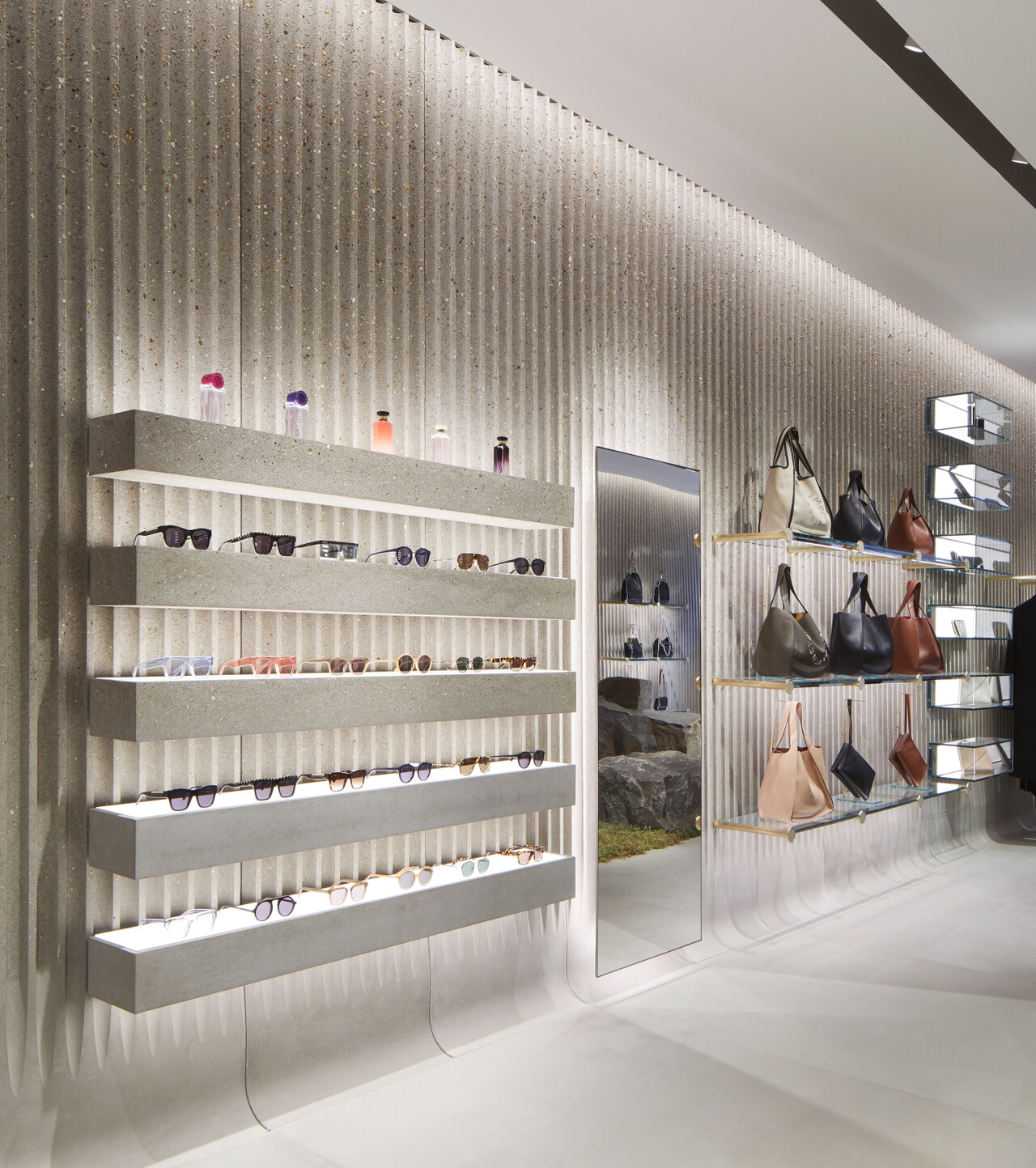
TL;DR: Bespoke concrete retail interiors let architects translate brand identity into physical form – through colour-matched surfaces, sculptural walls, and cast-in fixings for displays and signage. Success depends on balancing design ambition with durability, repeatability across stores, and close collaboration with a specialist manufacturer from concept through installation.
Retail architecture has always done more than shelter transactions. The way a space looks and feels tells customers who a brand is before a single product is picked up – a point research into retail store design and brand identity has long supported, framing store architecture as a tool for visual differentiation as much as function. For architects and interior designers briefed on flagship or rollout retail projects, concrete has become one of the most versatile materials for making that differentiation physical.
Bespoke concrete retail interiors offer colour, texture, and sculptural form that off-the-shelf finishes simply cannot replicate. But designing with concrete at retail scale raises specific questions: how do you protect design intent through manufacturing, how do you keep multiple stores consistent, and how do you make sure a stunning feature wall survives years of footfall? This guide works through each consideration, drawing on real retail projects to show how bespoke concrete moves from concept to finished space.
How can bespoke concrete translate a retail brand’s identity into physical space?
Concrete’s strength as a retail material lies in its capacity to be colour-matched, textured, and shaped to mirror a brand’s visual language precisely. Rather than selecting from a catalogue of finishes, designers can specify a bespoke mix that reproduces a brand’s exact tone, surface quality, and sculptural character.
Stella McCartney’s rollout with Trafalgar in Kuwait demonstrates this well. MASS Concrete holds approved colours, textures, and details on file from over a decade and more than a hundred Stella McCartney stores, meaning each new location – including the Kuwait flagship concept – matches brand standard from the very first sample. Paul Smith’s long-running relationship with MASS followed a similar path: several bespoke mix designs were developed specifically to clad joinery, display systems, and lightweight floor panels across the brand’s worldwide stores.
Design intent, in other words, is not something concrete compromises on. It is something the material can be engineered to preserve, store after store.
Choosing concrete applications for walls, displays, counters and signage
Where should concrete actually go in a retail fit-out? The honest answer is almost anywhere customers look or touch. Concrete feature walls set the tone of a space; architectural concrete retail displays and concrete shop counters carry that language through to the point of sale; branded concrete surfaces – plinths, signage, display units – reinforce it at smaller scale.
Christopher Kane’s Selfridges concession shows how far this can extend. Using the brand’s existing colour palette, bespoke colour-matched concrete was developed for retail display plinths and display units, proving that even secondary fixtures can carry brand DNA when the mix is engineered correctly. The lesson for specifiers: treat concrete applications as a coordinated system across walls, displays, counters and signage, not as isolated finishes chosen independently.
From artwork to manufactured surface: the Morphe brushstroke wall
Few projects illustrate the journey from concept to concrete better than Morphe’s beauty space at Selfridges Oxford Street. Designed by Beyond London, the brief called for a sculpted feature wall inspired by Morphe’s signature make-up brushes – an artistic concept that needed translating into a manufactured, installable surface.
MASS produced nine bespoke panels, each 1200mm high, using bespoke polymer mould liners to reproduce the brushstroke relief texture accurately across four separate wall planes. The external corner was detailed as a mitre so the artwork flowed continuously round it, and hole-centre markers were cast directly into the moulds so fixing and cable points for the illuminated MORPHE lettering aligned precisely on installation. The panels were cast in a Light Portland Grey GRC mix colour-matched to Morphe’s reference, with a very light etched finish to enhance the relief and 3mm open joints with blacked-out backing creating crisp shadow lines.
The result had to go in overnight, while Selfridges kept trading – and when the installation date shifted, the artwork was re-mapped and panels adapted to meet it. As Adrienne Davitt, Head of Visual Merchandising EMEA at Morphe, put it: “Our space in Selfridges looks amazing! The concrete has worked so well – it’s beautiful.”
Colour, texture, sculptural form and embedded branding details
Concrete colour matching, sculptural relief, and embedded branding details are where retail concrete earns its premium reputation. Stella McCartney’s Kuwait store used fluted concrete walls in a range of textures, waterjet-cut slots for shelf spigots, etched overhead portals with cast-in fixing systems, and low-level signage backlit with the brand logo. Each detail was engineered into the concrete itself, rather than applied afterwards.
This is the difference between decorative concrete and genuinely bespoke concrete: form, texture, and brand detail are designed in from the first sample, not bolted on at the end.
Designing for customer contact, merchandising changes, cleaning and durability
Retail fit-outs face relentless customer contact, frequent merchandising changes, and demanding cleaning regimes. Durability has to be engineered alongside aesthetics, not treated as an afterthought.
Slip rating matters wherever floor meets foot traffic – Stella McCartney’s Kuwait floor panels use an etched surface finish specifically to achieve the required slip rating while carrying the concrete aesthetic from wall to floor. Surfaces that face customer hands, such as counters and display plinths, benefit from durable sealant systems that resist staining and simplify cleaning. If a concrete surface is destined for a till point or counter, the same logic that applies to concrete countertop sealing is worth considering: stain resistance, scratch resistance, and ease of maintenance should all be specified upfront, not discovered after installation.
One flagship versus multiple stores: repeatability, moulds and batch consistency
A single flagship store and a multi-site rollout demand different design strategies. Flagship projects can prioritise one-off sculptural ambition – think the Morphe brushstroke wall, unrepeatable by design. Rollouts demand repeatable moulds and batch consistency instead.
Paul Smith’s relationship with MASS, spanning up to 50 stores, relies on bespoke mix designs developed once and reused across locations. Stella McCartney’s approach is similar: moulds for signature profiles are kept in stock and reused project to project, cutting material waste from new tooling and shortening lead times, while approved colours and textures on file guarantee batch consistency from the very first sample at each new site.
Integrating concrete with lighting, joinery, glazing and other retail finishes
Concrete rarely stands alone in a retail interior – it has to integrate cleanly with lighting, joinery, glazing, and display systems. The Morphe wall’s cast-in hole-centre markers ensured illuminated lettering aligned precisely with fixing and cable points on installation. Stella McCartney’s waterjet-cut slots allowed shelf spigots to fit cleanly into fluted concrete walls, while cast-in fixing systems on overhead portals sped up site installation. Paul Smith’s furniture plinths used cast-in threaded inserts and adjustable furniture feet, allowing joinery to sit level and secure without additional site-based fixing work.
The principle holds across every project: integration details are designed into the concrete at the manufacturing stage, so the finished surface works seamlessly with the rest of the fit-out.
MASS retail project examples: different design challenges and solutions
Each project discussed above represents a distinct design challenge resolved differently. Morphe needed an artistic concept translated into sculptural relief under an overnight installation constraint. Stella McCartney needed brand consistency protected across more than a hundred stores. Paul Smith needed bespoke mixes developed for worldwide rollout. Christopher Kane needed existing brand colours matched precisely for display fixtures within a department store concession. Taken together, they show the breadth of what bespoke concrete retail interiors can achieve – from feature walls to shop counters, display plinths to signage – when design intent and manufacturing expertise work in step.
Design briefing checklist for a bespoke concrete retail feature
Before briefing a manufacturer on a bespoke concrete retail feature, it helps to have answers to the following:
- What brand colours, textures, and finishes need matching, and is a reference sample available?
- Which applications are involved – walls, counters, displays, signage, flooring?
- Is this a single flagship or part of a multi-site rollout requiring repeatable moulds?
- What fixings, cutouts, or cast-in details need coordinating with lighting, joinery, or glazing?
- What slip rating, stain resistance, or durability standards apply to the space?
- What is the installation window, and are there trading constraints (such as overnight fit-outs)?
- Who manages the sample approval process, and at what stage will it be signed off?
Working through this checklist early protects design intent and reduces the risk of specification errors further down the line.
Explore bespoke concrete further
Bespoke concrete retail interiors reward close collaboration between designer and manufacturer at every stage – from first sample to final installation. If you’re developing a retail concept and want to see how colour, texture, and sculptural form can be engineered to match your brand, explore further bespoke concrete projects or review sample options, then speak to a specialist team about your design.
Frequently asked questions
Does concrete make a good countertop?
Concrete can make a great countertop if you want a custom, high-end industrial look, though it requires regular maintenance and proper sealing.
How long does a bespoke concrete retail project typically take?
Timelines vary by scope and whether moulds already exist from a previous project. Rollout brands with approved colours and reused moulds, such as Stella McCartney and Paul Smith, benefit from shorter lead times than entirely new sculptural work.
Can concrete finishes be matched exactly across multiple store locations?
Yes. Specialist manufacturers can hold approved colours, textures, and technical details on file so each new store matches brand standard from the first sample, as demonstrated across Stella McCartney’s and Paul Smith’s multi-store rollouts.
What are the alternatives to fully bespoke concrete for retail fit-outs?
Standard precast or off-the-shelf concrete products can suit budget-sensitive projects, but they won’t offer the same precision in colour matching, sculptural form, or embedded branding detail that bespoke mixes provide.
Who should be involved in briefing a bespoke concrete feature?
Architects, interior designers, main contractors, and the concrete manufacturer should align early – ideally before the design is finalised – on colours, applications, fixings, and installation constraints.